Chronic Pain from Prolonged Sitting: What Happens to Your Spine
Your spine wasn’t designed for hours of sitting. When you sit, especially with poor posture, you put pressure on your spinal discs and deep back muscles. Research from 2020 shows that 53% of office workers experience neck pain, and 53% have lower back pain. This most likely will be from your deep back muscles, disc or a combination of both.
Sitting causes your hip flexor muscles to tighten and shorten. This creates an imbalance that affects your entire spine. Why is this so? Because it changes your body’s centre of gravity. Your lower back curves unnaturally, to try and cope with the new stress, putting extra stress on your vertebrae and the discs between them.
The longer you sit, the more your spine stiffness increases. A 2019 study found that prolonged sitting significantly reduced spine flexibility. This stiffness can lead to chronic pain that doesn’t go away even when you stand up and move around. Why, because your muscles have become deconditioned and no longer support you the way you need them to. These msucles sends a message to your brain saying they are under stress and movement is no longer safe. Your brain responds by producing pain.
Your pain might start as a dull ache, but it can worsen over time. Many people develop what’s called “chronic primary pain” – pain that lasts longer than three months and affects your daily life.
How Sitting Too Much Affects Your Heart and Blood Vessels
When you sit for hours without moving, your heart has to work differently. Research from 2022 shows that sitting for more than six hours daily increases your risk of heart problems. Your blood doesn’t flow as well when you’re sitting still.
Scientists have found that prolonged sitting causes your blood pressure to rise. A 2021 study discovered that when you sit without breaks, your systolic blood pressure increases significantly. This happens because your blood vessels can’t work properly when you’re not moving.
Your arteries also become stiffer when you sit too long. This stiffness makes it harder for your heart to pump blood around your body. The good news is that even short movement breaks can help your blood vessels work better.
Your Blood Sugar and Metabolism Take a Hit
Sitting too much makes it harder for your body to control blood sugar levels. A 2020 study found that people who sit for long periods have a 112% higher risk of developing diabetes. This happens because your muscles aren’t using glucose properly when you’re sitting.
When you sit, your body’s ability to break down fats also slows down. This can lead to weight gain and higher cholesterol levels. Your metabolism essentially goes into “sleep mode” when you sit for extended periods.
Breaking up your sitting time with just two minutes of walking every 30 minutes can significantly improve how your body handles blood sugar. This small change can make a big difference to your health.
Movement Problems: When Your Body Forgets How to Work Properly
Sitting too much doesn’t just cause pain – it changes how your body moves. Your muscles become weak and tight in different places. Your core muscles, which support your spine, become lazy when you sit all day.
Research shows that people who sit for long periods have reduced hip extension. This means you can’t move your legs backward as far as you should. This limitation affects how you walk, run, and even stand up from chairs.
Your balance and coordination also suffer when you sit too much. Your body loses its natural ability to react quickly to changes in position. This can increase your risk of falls and injuries.
How Sitting Affects Your Brain and Stress Levels
Your brain needs good blood flow to work properly. When you sit for hours, less blood reaches your brain. A 2021 study found that uninterrupted sitting significantly reduces blood flow to your brain.
This reduced blood flow affects your ability to think clearly. You might notice that you can’t concentrate as well or feel mentally tired after long periods of sitting. Your memory and decision-making skills can also be affected.
Sitting too much also increases your stress levels. Your body produces more stress hormones like cortisol when you’re sedentary. This creates a cycle where stress makes you want to sit more, but sitting creates more stress.
Recent research from 2024 shows that people who sit for more than 13 hours daily experience brain shrinkage. This affects areas of your brain responsible for memory and learning.
Chronic Stress: The Hidden Danger of Too Much Sitting
When you sit for long periods, your body thinks you’re in a state of low-level emergency. Your nervous system stays on high alert, producing stress hormones continuously. This chronic stress affects every system in your body.
Your sympathetic nervous system – the part that controls your “fight or flight” response – becomes overactive. This raises your heart rate, blood pressure, and stress hormone levels even when you’re just sitting quietly.
Chronic stress from sitting also weakens your immune system. You become more likely to get sick and take longer to recover from illnesses. Your sleep quality suffers, creating even more stress on your body.
How a Multimodal Chiropractic Approach Can Help Reduce Stress
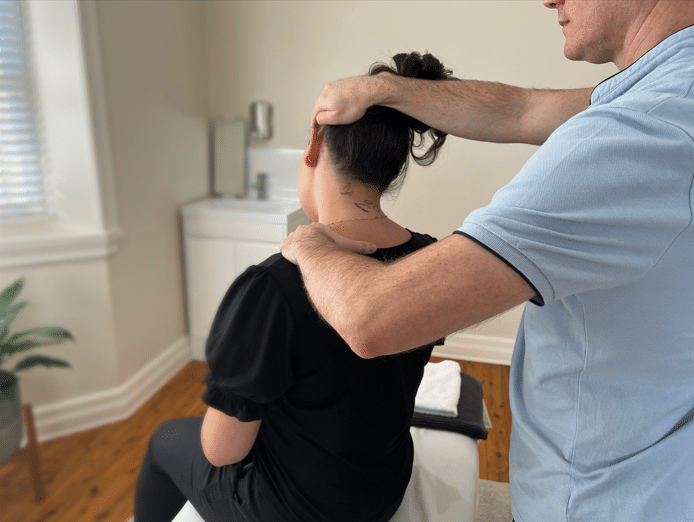
As a chiropractor, I see firsthand how sitting affects your nervous system and creates chronic stress in your body. The good news is that a comprehensive chiropractic approach can help reverse many of these effects.
Chiropractic adjustments work directly on your nervous system. When I perform spinal adjustments, I’m helping to reset the communication between your brain and body. Research from 2019 shows that chiropractic care stimulates your parasympathetic nervous system – the part that helps you relax and heal.
Soft tissue therapy, including massage and trigger point therapy, helps release the muscle tension that builds up from sitting. This therapy improves blood flow and reduces the stress hormones in your muscles.
Exercise and movement therapy are crucial parts of your treatment. I’ll teach you specific exercises that counteract the effects of sitting. These exercises strengthen your core, improve your posture, and help your body remember how to move properly.
This combination of adjustments, soft tissue work, and exercise creates a powerful effect on your nervous system. It helps switch your body from a state of chronic stress to one of healing and recovery.
Simple Solutions: Breaking the Sitting Cycle
The solution to sitting problems isn’t necessarily to stand all day. Instead, you need to break up your sitting time with regular movement. Research shows that taking a two-minute walk every 30 minutes can dramatically improve your health.
Standing desks can help, but only if you use them correctly. Alternate between sitting and standing throughout the day. Start with 15-30 minutes of standing at a time and gradually increase.
Set reminders on your phone or computer to move every 20-30 minutes. Even simple movements like shoulder rolls, neck stretches, or standing up and sitting down can help.
When you do sit, focus on your posture. Keep your feet flat on the floor, your back straight, and your screen at eye level. Your knees should be at about 90 degrees.