- 02 9712 1736
- [email protected]
- 212 Great North Road, Five Dock, NSW 2046
- Open 7 days a week

Stress is everywhere. It shows up as tight shoulders, dull pain, and restless nights. But what if I told you your body has a chemical messenger driving all of it? It’s called cortisol. And the way I work as a chiropractor may help your body manage it better. In this blog, I’ll walk you through what the research actually says.

Let me start with the basics. Cortisol is a hormone. Your body makes it when you feel stressed. Think of it like an alarm system inside your body. When something stressful happens, cortisol tells your body to get ready. Your heart beats faster. Your muscles tighten. Your brain goes on high alert.
This is your stress response, and in small doses, it’s helpful. It helps you react quickly to danger. But here’s the problem. For many of you, that alarm never fully switches off. Work pressure, poor sleep, and ongoing pain keep it ringing. Over time, high cortisol can cause real damage.
A 2024 meta-analysis by Rogerson and colleagues confirmed this. They found that ongoing stress disrupts something called your HPA axis. That’s the system controlling cortisol in your body. When it stays overactive, your cortisol levels become unbalanced. This can lead to chronic inflammation, poor sleep, and more pain.
So when you come to me with achy pain, muscle tightness, or injuries that won’t heal, I’m always thinking about cortisol too.
Here’s something most people don’t realise. Your pain and your stress are deeply connected. When cortisol stays high, your nervous system stays on edge. It becomes oversensitive. Small signals that shouldn’t hurt start to feel painful.
That persistent dull pain in your neck? It might not just be a sore joint. That achy pain between your shoulders? It could be your stress response talking. When your body is stuck in “fight or flight” mode, your muscles tighten up as a protective response. They stay tight. And then you get injuries more easily because tight, stressed tissues don’t move well.
A 2025 systematic review confirmed these connections. Researchers found that spinal manual therapy can produce short-term changes in both pain perception and nervous system activity. The studies showed changes at both central nervous system and autonomic nervous system levels following treatment.
This is why I look beyond just your sore spot. Your pain often has roots in how your whole nervous system is functioning.
Now, let me be honest with you. The research on chiropractic adjustments and cortisol is promising but still developing.
A 2019 review by Colombi and Testa examined thirteen studies on spinal manipulative therapy and its effects on cortisol and the immune-endocrine system. Nine of those studies looked specifically at cortisol levels. They found that spinal manipulation may influence cortisol levels after treatment. But the results varied depending on which part of the spine was treated and how cortisol was measured.
A 2024 systematic review by Kovanur Sampath and colleagues looked at spinal manipulation and the autonomic nervous system. They reviewed fourteen trials with over 600 participants. They found evidence that neck spinal manipulation can influence autonomic nervous system activity. This is important because your autonomic nervous system controls your stress response directly.
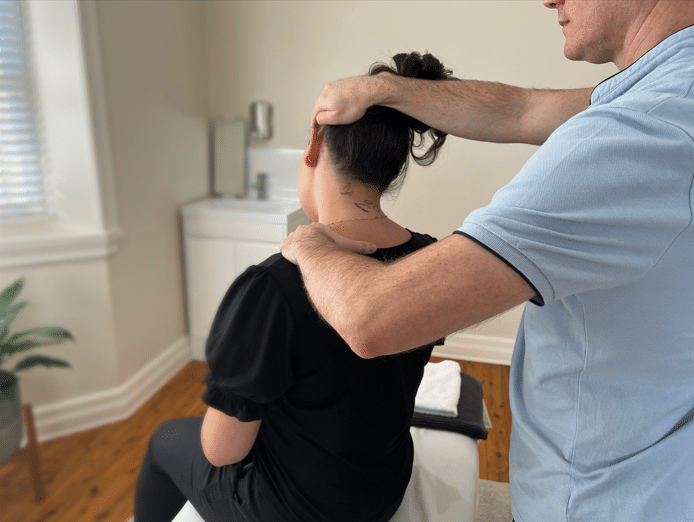
Think of it this way. When I perform an adjustment, I’m not just moving a joint. I’m sending a signal through your nervous system. That signal may help shift your body out of “stress mode” and toward a calmer state. We call this nervous system regulation.
Imagine your nervous system as a light switch. Stress keeps it jammed to “on.” An adjustment may help nudge that switch toward the “off” position. It doesn’t fix everything in one go. But over time, regular care may help your body find a better balance.
Expert Insight:
The mechanism likely involves proprioceptive input from spinal joints reaching the prefrontal cortex. This brain region regulates both the autonomic nervous system and the HPA axis. However, the evidence is still moderate quality. More high-quality randomised controlled trials are needed. The clinical effect may be more meaningful over multiple sessions rather than from a single treatment.
Here’s something fascinating from the research. A large 2024 meta-analysis in Nature Human Behaviour changed how we think about touch therapy. Packheiser and colleagues analysed 137 studies with nearly 13,000 people. They found that touch interventions produced medium-sized positive effects on both physical and mental health.
What stood out most for me was this. Touch-based therapies were especially effective at reducing pain, depression, and anxiety in adults. The number of sessions mattered too. More frequent sessions were linked to better outcomes for things like anxiety and pain.
This matters for what I do every day. When I use soft tissue therapy, I’m not just working on a tight muscle. I’m providing structured, therapeutic touch that your nervous system responds to. For many of you, that hands-on care is a form of stress reduction in itself.
This is where I get really passionate. Research consistently shows that the strongest outcomes come from combining treatments. Not just adjustments alone. Not just exercise alone. But a multimodal approach.
A 2022 narrative review in Frontiers in Pain Research examined the evidence for spinal manipulation in managing spine pain. The strongest evidence supported multimodal approaches. Specifically, combining spinal manipulation with exercise produced better pain and disability outcomes than either treatment alone.
In my practice, this means your care plan typically includes three things. First, soft tissue therapy to address your muscle tightness and help calm your nervous system. Second, spinal adjustments to improve joint function and send better signals through your nervous system. Third, prescribed exercises tailored to your body.
Think of it like a three-legged stool. Soft tissue work calms things down. Adjustments help things move. Exercise makes things stronger. Remove one leg and the stool wobbles. All three together give you the best chance of lasting results.
Expert Insight:
The UK’s NICE guidelines recommend spinal manipulation only as part of a multimodal package including exercise. This isn’t a limitation. It’s actually how the best results are achieved. The synergy between manual therapy’s neurophysiological effects and exercise’s cortisol-regulating properties may address the stress-pain cycle from multiple angles simultaneously.
Exercise is one of the most powerful tools for managing cortisol. But here’s what many people get wrong. More isn’t always better.
A 2021 study by Caplin and colleagues showed that exercise intensity directly affects cortisol regulation. They found that vigorous exercise dampened the stress hormone response in a dose-dependent manner. But the key was getting the dosage right.
Too little exercise and your body doesn’t get the stimulus it needs. Too much and you actually increase cortisol, adding stress to an already stressed system. This is especially important if you’re dealing with injuries or chronic pain.
As your chiropractor, I can help prescribe the correct exercise dosage for your situation. This means choosing the right type of movement, the right intensity, and the right volume for where your body is right now. Not where it was six months ago. Not where you want it to be. Right now.
This is something we take seriously. Exercise prescription isn’t a generic handout. It’s a clinical decision based on your pain levels, your strength, and your recovery capacity. Getting this right can make the difference between feeling better and making things worse.
When cortisol stays elevated, it disrupts two things that matter enormously for healing: inflammation and sleep.
Chronic high cortisol promotes ongoing inflammation. This inflammation makes your tissues more sensitive. It slows healing. It makes your dull pain and achy pain worse. Research has shown that cortisol dysregulation can unbalance pro-inflammatory and anti-inflammatory markers in your body.
Sleep is the other casualty. Elevated cortisol at night disrupts your sleep cycle. And poor sleep raises cortisol further. It becomes a vicious cycle.
The 2024 meta-analysis by Rogerson and colleagues found that stress management interventions — including relaxation-based approaches — can positively influence cortisol levels. Mindfulness and relaxation techniques showed the strongest effects. By helping your nervous system shift from a stressed state to a calmer one, chiropractic care may contribute to breaking this cycle.
When your pain decreases, you sleep better. When you sleep better, your cortisol normalises. When your cortisol normalises, your inflammation decreases. And when inflammation decreases, your pain reduces further. That’s the cycle I’m trying to help you create.
Imagine a snowball rolling downhill. Stress, pain, poor sleep, and inflammation all feed each other. My goal is to help slow that snowball down. Then we start rolling it in the other direction, toward recovery.
Expert Insight:
The relationship between manual therapy and inflammation is indirect. We don’t yet have strong clinical evidence that a single adjustment directly lowers inflammatory markers in a meaningful way. What we do have is evidence that reducing pain, improving mobility, and supporting better sleep quality can collectively shift the neuroendocrine environment toward lower cortisol output. This is a systems-level effect, not a single-mechanism one.
Long-term management of cortisol isn’t just about reducing stress in the moment. It’s about building resilience. And that means building strength.
When your muscles are stronger, they handle load better. Your joints are better supported. You’re less likely to sustain injuries. And your nervous system has less reason to stay on high alert.
A meta-analysis of 98 studies found that regular physical activity is associated with healthier cortisol patterns throughout the day. The research suggests that exercise helps regulate the HPA axis by strengthening the brain’s ability to switch off the cortisol response after a stressor passes.
This is why I don’t just treat your pain and send you on your way. I want to help you build the strength and movement capacity to keep your stress response in check long term.

So, can a chiropractor help with cortisol levels? The honest answer is: it’s complicated, but promising. Direct evidence that a single adjustment drops your cortisol is limited. But the bigger picture is compelling. A multimodal chiropractic approach using adjustments, soft tissue therapy, and prescribed exercise can address the interconnected systems that drive cortisol dysregulation. By reducing your pain, improving your movement, supporting nervous system regulation, and prescribing appropriate exercise, I can help create conditions where your body manages stress more effectively. The research is evolving, and I’m committed to following where it leads.

Scott has more than 20 years of clinical experience as a movement expert and musculoskeletal health professional. His thorough understanding of how pain affects your spine, joints, muscles, and total well-being is the result of significant academic study and many many years of clinical experience. Scott’s real interest in movement mechanics enables him to develop individualised care plans that summarise complex problems into clear, simple treatments, leading to quicker healing times. His friendly, attentive approach ensures that you not only comprehend but also feel supported throughout your treatment journey, allowing you to return to the things you like with restored confidence and vitality.