What Actually Happens When You Strain a Muscle?
A muscle strain happens when muscle fibres (or the tendon attaching muscle to bone) are stretched beyond their limit or torn. Strains are graded by severity:
-
- Grade 1 – Mild overstretching with minimal fibre damage. Usually manageable with rest, though it still benefits from guidance.
-
- Grade 2 – Partial tearing, with noticeable pain, swelling, and reduced strength.
-
- Grade 3 – A complete tear, often needing hands-on management and a structured rehabilitation plan.
The tricky part is that you can’t always tell which grade you’re dealing with just by how it feels in the first 24 hours. Adrenaline and inflammation can mask the true extent of the damage, which is exactly why so many people underestimate a strain until it’s already become a chronic problem.
7 Signs Your Muscle Strain Needs Professional Care
1. The Pain Hasn’t Eased After a Few Days
A mild strain typically starts settling within 48 to 72 hours. If your pain is just as sharp on day four as it was on day one, or if it’s getting worse rather than better, that’s your body telling you something more than simple overuse is going on. This is one of the most common reasons people search for muscle strain treatment in Five Dock rather than continuing to “wait it out” at home.
2. You Notice Swelling, Bruising, or Visible Deformity
Some swelling after a strain is normal. But significant bruising, a visible lump, or an area that looks noticeably different from the same muscle on the other side of your body can point to a more serious tear. These signs shouldn’t be ignored, particularly if the bruising spreads or deepens in colour over the following days.
3. You’ve Lost Strength or Range of Motion
Can’t lift your arm above your head? Struggling to fully straighten your leg? A genuine loss of function, not just discomfort, but an actual inability to move or load the area normally, is a strong signal that the muscle fibres need proper assessment and a structured recovery plan rather than guesswork.
4. The Injury Keeps Coming Back
This is one we see constantly in our clinic. Someone strains their hamstring, rests until it feels okay, goes back to training, and strains it again a few weeks later. And again. Recurring strains almost always point to an underlying issue, whether that’s poor movement mechanics, muscle imbalance, or incomplete healing the first time around. Breaking that cycle is exactly what our four-step care approach is built for.
5. You Feel Numbness, Tingling, or Radiating Pain
If your muscle pain comes with pins and needles, numbness, or pain that travels down an arm or leg, this isn’t a simple muscular issue anymore. It suggests possible nerve involvement, which needs a thorough assessment to rule out complications and guide the right treatment approach.
6. Everyday Movements Have Become Difficult
Struggling to climb stairs, get out of bed, sit at your desk, or pick up your kids? When a muscle strain starts interfering with your normal daily routine, rather than just sport or exercise, it’s a clear sign the injury is significant enough to need professional attention.
7. It’s Been Weeks and You’re Still Not “Right”
Time alone doesn’t fix everything. If it’s been several weeks and the area still feels tight, weak, or “not quite the same,” the muscle may have healed with scar tissue or compensation patterns that are limiting your recovery. This is often where people feel stuck, doing the right things but not seeing real progress, and it’s precisely where hands-on, targeted care makes the biggest difference.
Why DIY Rest Isn’t Always Enough
Ice, rest, and time work well for very mild strains. But for anything beyond a Grade 1 injury, relying on rest alone can actually slow your recovery. Without proper movement and loading during healing, muscle fibres can regrow in a disorganised way, leaving the area weaker and more prone to reinjury. This is a big part of why professional muscle strain treatment in Five Dock focuses on more than just “resting until it stops hurting” — it’s about guiding the tissue to heal well, not just heal.
What to Expect From Professional Muscle Strain Treatment in Five Dock
When you come into Five Dock Osteopathic & Chiropractic Centre with a muscle strain, you won’t just get a quick five-minute look and a “take it easy.” Our practitioners take the time to properly understand what’s going on and why.
A thorough assessment. We look at the injured area, but also at how the rest of your body is moving. Often, a hamstring or calf strain has roots in hip stability, posture, or movement patterns elsewhere in the body.
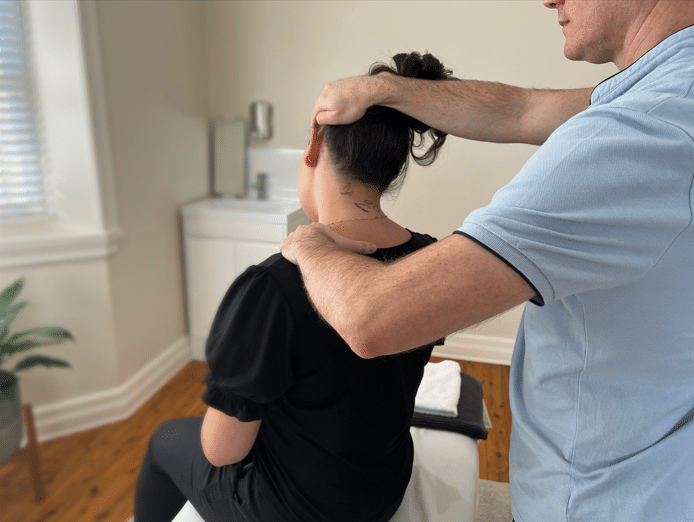
Hands-on treatment from your very first visit. Our chiropractors and osteopaths use targeted massage, soft tissue work, and gentle mobilisation to reduce pain and support healing from day one, rather than waiting weeks to start active treatment.
A tailored recovery plan. No two strains are identical, and no two bodies recover at the same pace. You’ll receive an individualised care plan based on your injury, your goals, and your lifestyle, whether that’s getting back to weekend football or simply being able to garden without pain.
Functional movement and rehabilitation. Once the acute pain settles, we focus on restoring strength, flexibility, and correct movement patterns so the injury doesn’t come straight back. This step is often the one people skip when treating themselves at home, and it’s usually why the same strain keeps recurring.
Guidance to self-manage long term. Beyond the clinic, we make sure you understand what caused the strain and how to prevent it, giving you practical tools and exercises to protect the area going forward.
Common Muscle Strains We Treat
Our practitioners regularly help patients across Five Dock, Drummoyne, Concord, Haberfield, Croydon, Abbotsford, and the wider Inner West with strains affecting the:
-
- Hamstrings and quadriceps.
-
- Shoulders and upper back.
-
- Neck muscles from posture or sudden movement.
Whether your strain happened on the sports field, in the gym, at work, or simply reaching awkwardly for something at home, the same principle applies: the sooner it’s properly assessed, the shorter your road back to full movement usually is.
When Should You Book an Appointment?
As a general rule, if you’re experiencing any of the seven signs above, or if you’re simply unsure how serious your injury is, it’s worth getting it checked rather than guessing. We understand pain, stiffness, and reduced mobility can disrupt your whole day, so we cater for last-minute and urgent appointments where possible.
Getting appropriate muscle strain treatment in Five Dock early doesn’t just speed up recovery; it also reduces your risk of the injury becoming a recurring problem that follows you around for months or years.