- 02 9712 1736
- [email protected]
- 212 Great North Road, Five Dock, NSW 2046
- Open 7 days a week

Home » Blogs » Lower Back Pain After Sitting: When to Seek Care
Your back felt fine at 9am. By mid-afternoon, a dull ache sits low in your spine and you keep shifting in your chair. We see this pattern every week in desk and hybrid workers from Glebe, Forest Lodge, Camperdown, Ultimo and Broadway. Most of this pain is a normal protest against long stillness, not damage. But some signs do need prompt clinical attention. Here is how to tell the difference, and what actually helps.
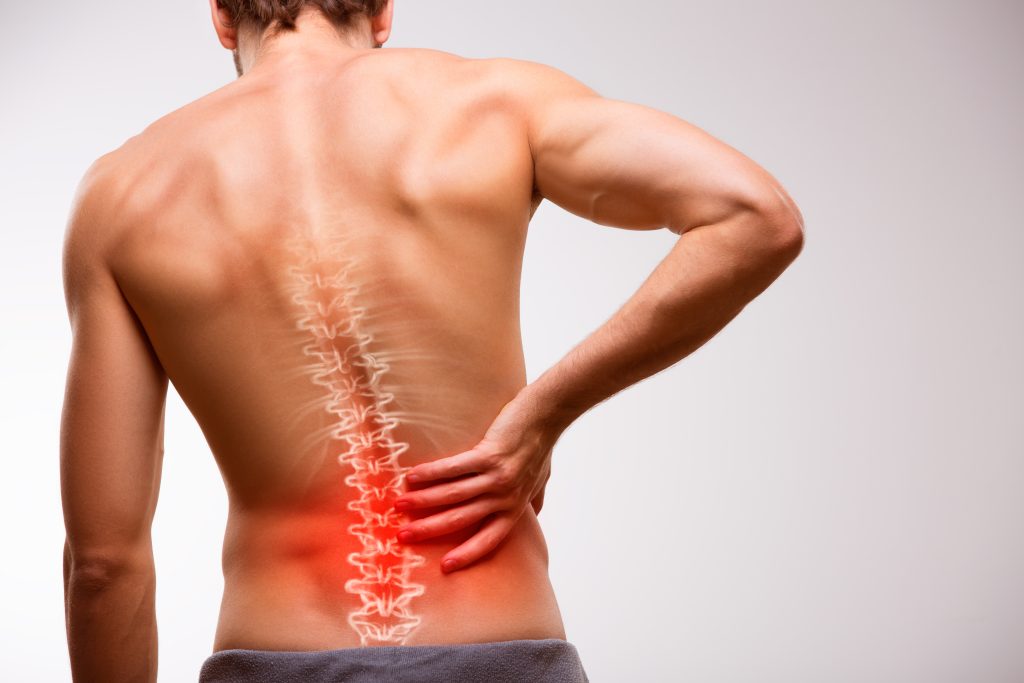
Your lower back is built for variety, not for eight hours in one shape. Sitting still loads the same tissues in the same way, minute after minute. A systematic review looked at ten studies that measured sitting time objectively. All but one found that sitting time produced an immediate rise in low back pain (De Carvalho et al., Journal of Manipulative & Physiological Therapeutics, 2020). Six of those studies reached pain levels people would call clinically meaningful.
So the ache you feel by 3pm is real and well documented. What matters for you is what happens next. As you hold one posture for a long period of time, your deep posture muscles fatigue. In one study, thirty adolescents sat slumped for thirty minutes while typing. Muscle fatigue markers rose in the deep abdominal and multifidus muscles, even more so in those adolescents with existing back pain (Jung et al., Medicina, 2020). That research sample was small and young, so read it as a potential cause for back pain, not a hard and fast rule.
Here is the useful takeaway. Sitting will reliably provoke pain in the moment, but it is a weak villain for causing long-term problems. One study, a meta-analysis, pooled sixteen longitudinal studies with 100,002 adults. It found no clear link between sedentary hours and developing long-term ongoing back pain (Alzahrani et al., PeerJ, 2022). Now, we can’t use one study as our reason to not move. Because research has also shown, sitting three or more hours a day was linked to worse back-related disability, with about a 24% increase in chance.
This cross-sectional data paints a stronger picture. That is, prolonged sitting was linked to a 42% rise in the odds of low back pain (Baradaran Mahdavi et al., Health Promotion Perspectives, 2021). Those studies are snapshots, so they do not show the cause of back pain, and that is the key factor.
What that means in practice is reassuring. Your chair is probably not damaging your spine. Long stillness is simply an uncomfortable input; your muscles and joints don’t like it. Because it is not what your body is designed for, your body is asking for movement.
Most lower back pain has no single identifiable structural cause. The Lancet’s low back pain series is blunt. For nearly everyone, a specific pain source cannot be pinned down (Hartvigsen et al., The Lancet, 2018). Only a small proportion of cases involve fracture, infection or malignancy. Most new episodes settle quickly, though recurrence is common.
Pain from inactivity and deconditioning usually has a recognisable shape. It builds over hours of sitting and eases when you stand, walk or stretch. The feeling is dull and achy, spreading across the lower back rather than sharp and pinpointed. It often improves by the weekend and returns midweek. You can usually still move, even if the first few steps feel stiff.
So how do you know if your back pain needs assessment? We look for a different pattern. Pain that wakes you at night, does not change with position, or keeps escalating over weeks deserves assessment. So does new leg pain or weakness, numbness spreading into one or both legs, or pain following a real fall or impact. In practice, we combine your history with movement testing, strength and reflex checks, and sensation testing. No single finding decides anything; it is the whole picture that is important. Which is exactly what the research shows.
Some symptoms need same-day medical care, not a chiropractic appointment. Get urgent help if you develop trouble passing urine or experience a loss of bladder or bowel control. The same applies to numbness around the groin, buttocks or inner thigh. Weakness in both legs is another sign you need to seek urgent medical care. These can point to cauda equina syndrome, a compression of the lower nerve roots.
This is rare. Around 0.08% of back and radicular pain presentations in primary care relate to cauda equina syndrome (Stuart et al., Australian Journal of General Practice, 2025). Fewer than 10% of referrals to neurosurgery for suspected cases end in surgery. But the individual warning signs are imperfect on their own. So, if you notice any of these symptoms, always go to your local medical centre or hospital for quick evaluation.
That imperfection is why we take clusters seriously rather than single symptoms. A systematic review of forty studies found individual red flags have low accuracy as standalone screening tools (Maselli et al., Disability and Rehabilitation, 2022). Combining several raises the chance of catching serious pathology. For you, that means we ask a lot of questions that seem unrelated to your sore back. Fevers, unexplained weight loss, cancer history, steroid use and night pain all change how we act.
Other symptoms are not emergencies, but they earn an appointment sooner. Pain travelling below your knee fits here. So do pins and needles in the foot, pain lasting more than six weeks, or a third episode this year. If you are experiencing any of these symptoms, book an appointment to come see us.
Guidelines across countries agree on first steps. Stay active, keep working where you can, learn what your pain means, and avoid rushing to scans (Foster et al., The Lancet, 2018). Imaging early rarely changes what helps you, and it often adds worry.
Self-management works best when it targets the cause: stillness. Breaking up sitting has real trial support. One research trial followed 193 office workers for a year. Active breaks and postural shifts cut median recovery time from two months to one. Recurrence dropped from 44% in the control group to 21% and 18% (Akkarakittichoke et al., Musculoskeletal Science and Practice, 2021). If you have a sit-stand desk, a simple rhythm beats guesswork. A randomised trial gave 56 desk workers a fixed ratio: 30 minutes sitting, then 15 minutes standing. Worst pain levels improved by 1.33 points out of 10 over three months (Brakenridge et al., Applied Ergonomics, 2026). A personalised ratio worked less well, mostly because people stuck to it less.
Reducing sitting also has limits worth knowing. The Stand Back trial gave desk workers counselling, a sit-stand attachment and pain self-management. Disability scores improved by eight points, but average pain scores did not significantly change (Barone Gibbs et al., Occupational and Environmental Medicine, 2018). That trial had only 27 participants. Still, the message is honest: movement changes what you can do, sometimes before it changes what you feel.
So try two weeks of the basics. Break up sitting every 30 minutes, walk daily, keep lifting and bending in your routine, and sleep properly. Book an assessment if pain is not improving after those two weeks. Do the same if it keeps returning, limits work or training, or makes you avoid movement.
When your nervous system reads your back as threatened, it protects it. Muscles guard, movement gets smaller and cautious, and the area becomes more tender. This is smart after a genuine injury. After a week of long meetings and no movement, it is unhelpful. Nothing is damaged, yet the guarding itself limits you.
This protective pattern is measurable. A meta-analysis of 21 studies with 1,907 people found that greater pain-related fear went with reduced spinal flexion movement (Ippersiel et al., Physical Therapy, 2022). The link was stronger for the flexion-relaxation ratio, at r = -0.40. In plain terms: muscles that should switch off during bending stay switched on. These were mostly cross-sectional studies, so they show a pattern, not a cause.
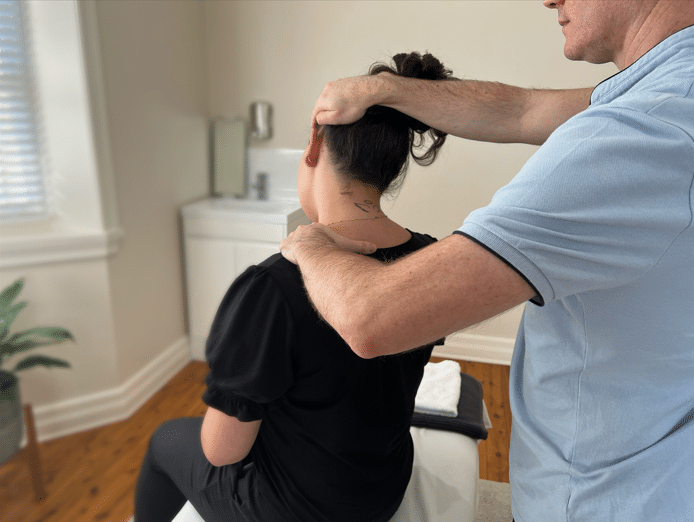
Our aim is to lower that guarding and give your back reasons to move again. We use three tools together: soft tissue therapy, spinal adjustments or mobilisation, and graded exercise. The evidence for the combination is reasonable, and we will not oversell it.
Exercise carries the most weight. A Cochrane review pooled 249 trials with 24,486 people. Exercise reduced pain by 15.2 points out of 100 against no treatment or usual care (Hayden et al., Cochrane Database of Systematic Reviews, 2021). That crosses the threshold for a clinically important change, with moderate-certainty evidence.
Hands-on care is a useful accelerator, not the whole answer. A large review covered 47 trials with 9,211 people. Spinal manipulation worked as well as other recommended treatments for chronic low back pain (Rubinstein et al., BMJ, 2019). Function improved slightly more in the short term. The 2026 Cochrane update of 76 trials with 11,866 people is more cautious. Against sham treatment, manipulation gave a small pain reduction of 7 points out of 100. The certainty of that finding was very low (de Zoete et al., Cochrane Database of Systematic Reviews, 2026). Combining matters more than choosing. One review compared manual therapy plus exercise against exercise alone across ten trials. Eight of them showed added short-term benefit (Narenthiran et al., Journal of Bodywork and Movement Therapies, 2025).
Soft tissue work fits the same picture. A meta-analysis of eight trials with 375 people found myofascial release improved pain and physical function modestly (Wu et al., Frontiers in Medicine, 2021).
The real benefit is in the whole picture. Manipulation and soft tissue massage allow you to start moving through bigger ranges of motion, and this, when combined with exercise, speeds up recovery. How does this occur? By changing the perceived threat of inactivity that your brain is receiving.
“Just exercise more” is useless advice during a busy work week. Treatment and exercise dose is the real question, and it is where we spend time helping you. A research review of 82 trials with 5,033 people mapped the dose-response curve for low back pain with exercise (Liang et al., Journal of Orthopaedic & Sports Physical Therapy, 2024). What they were trying to establish was the ideal amount of exercise to do to have the best result for lower back pain. The findings were that around 520 MET-minutes per week was enough for a clinically important change in pain.
Mood belongs in this conversation too, because your mood changes with back pain. A systematic review of 62 studies involving 63,326 people. Found depressive symptoms were consistently linked with worse disability outcomes in people with low back pain (Wong et al., Journal of General Internal Medicine, 2021). That is the prognosis with recurrent back pain, not proof of the back pain cause. Exercise appears to help both sides. In 28 trials with 2,265 people living with chronic pain, exercise modestly reduced depression and anxiety scores (Wu et al., Journal of Affective Disorders, 2025).
The best way to improve is to have a plan that fits your actual week, not an ideal one. Two days in an Inner West or Five Dock office, three days at a kitchen table. Then a commute by light rail or bike. We build your plan around those constraints rather than against them.
Here it is important to remember. A few small things carry most of the value. Change position roughly every half hour, even briefly. Take walking calls along Great North Road or the bay run instead of sitting through them. Keep two or three short strength sessions a week for your hips, core and legs. Keep bending and lifting in your life so your back stays used to it. Then let intensity build slowly across weeks, not days.
If your back keeps flaring on Wednesday every week, that is information, not bad luck. We use this information to help plan your recovery. We assess how you move, how you load and how you recover, then we set a plan you can actually achieve.

Sitting at a desk all day isn’t damaging your spine, but it’s not doing you any favours either. Your back is built for movement, so long stretches in one position fatigue the muscles that hold you upright, and that’s what causes the dull, achy pain by mid-afternoon. The good news is that most back pain isn’t a sign of injury. It has no single identifiable cause, and it settles when you get moving again.
Real red flags, like bladder changes or numbness in the groin, are rare and need urgent care, but everyday stiffness usually just needs a change of position, regular movement breaks, and time. When pain sticks around, exercise makes the biggest difference, and hands-on care like chiropractic and massage works best alongside it, not instead of it. The goal isn’t to avoid sitting altogether. It’s to build a plan that fits around your real week, not an ideal one.
De Carvalho, D. E., de Luca, K., Funabashi, M., Breen, A., Wong, A. Y. L., Johansson, M. S., Ferreira, M. L., Swab, M., Kawchuk, G. N., Adams, J., & Hartvigsen, J. “Association of Exposures to Seated Postures With Immediate Increases in Back Pain: A Systematic Review of Studies With Objectively Measured Sitting Time.” Journal of Manipulative & Physiological Therapeutics, 2020, 43(1), 1–12. https://doi.org/10.1016/j.jmpt.2019.10.001
Alzahrani, H., Alshehri, M. A., Alzhrani, M., Alshehri, Y. S., & Al Attar, W. S. A. “The association between sedentary behavior and low back pain in adults: a systematic review and meta-analysis of longitudinal studies.” PeerJ, 2022, 10, e13127. https://doi.org/10.7717/peerj.13127
Baradaran Mahdavi, S., Riahi, R., Vahdatpour, B., & Kelishadi, R. “Association between sedentary behavior and low back pain; A systematic review and meta-analysis.” Health Promotion Perspectives, 2021, 11(4), 393–410. https://doi.org/10.34172/hpp.2021.50
Jung, K.-S., Jung, J.-H., In, T.-S., & Cho, H.-Y. “Effects of Prolonged Sitting with Slumped Posture on Trunk Muscular Fatigue in Adolescents with and without Chronic Lower Back Pain.” Medicina (Kaunas), 2020, 57(1), 3. https://doi.org/10.3390/medicina57010003
Hartvigsen, J., Hancock, M. J., Kongsted, A., Louw, Q., Ferreira, M. L., Genevay, S., Hoy, D., Karppinen, J., Pransky, G., Sieper, J., Smeets, R. J., & Underwood, M. “What low back pain is and why we need to pay attention.” The Lancet, 2018, 391(10137), 2356–2367. https://doi.org/10.1016/S0140-6736(18)30480-X
Foster, N. E., Anema, J. R., Cherkin, D., Chou, R., Cohen, S. P., Gross, D. P., Ferreira, P. H., Fritz, J. M., Koes, B. W., Peul, W., Turner, J. A., & Maher, C. G. “Prevention and treatment of low back pain: evidence, challenges, and promising directions.” The Lancet, 2018, 391(10137), 2368–2383. https://doi.org/10.1016/S0140-6736(18)30489-6
Maselli, F., Palladino, M., Barbari, V., Storari, L., Rossettini, G., & Testa, M. “The diagnostic value of Red Flags in thoracolumbar pain: a systematic review.” Disability and Rehabilitation, 2022, 44(8), 1190–1206. https://doi.org/10.1080/09638288.2020.1804626
Stuart, M. J., Burnett, A., & Webster, J. D. “Cauda equina syndrome and severe lumbar-sacral radiculopathy in general practice: Finding the needle in the haystack.” Australian Journal of General Practice, 2025, 54(7). https://doi.org/10.31128/AJGP-08-24-7389
Ippersiel, P., Teoli, A., Wideman, T. H., Preuss, R. A., & Robbins, S. M. “The Relationship Between Pain-Related Threat and Motor Behavior in Nonspecific Low Back Pain: A Systematic Review and Meta-Analysis.” Physical Therapy, 2022, 102(2), pzab274. https://doi.org/10.1093/ptj/pzab274
Rubinstein, S. M., de Zoete, A., van Middelkoop, M., Assendelft, W. J. J., de Boer, M. R., & van Tulder, M. W. “Benefits and harms of spinal manipulative therapy for the treatment of chronic low back pain: systematic review and meta-analysis of randomised controlled trials.” BMJ, 2019, 364, l689. https://doi.org/10.1136/bmj.l689
de Zoete, A., Innocenti, T., Petrozzi, M. J., van Middelkoop, M., Assendelft, W. J. J., de Boer, M. R., van Tulder, M. W., & Rubinstein, S. M. “Spinal manipulative therapy for adults with chronic low back pain.” Cochrane Database of Systematic Reviews, 2026, 1(1), CD008112. https://doi.org/10.1002/14651858.CD008112.pub3
Hayden, J. A., Ellis, J., Ogilvie, R., Malmivaara, A., & van Tulder, M. W. “Exercise therapy for chronic low back pain.” Cochrane Database of Systematic Reviews, 2021, 9, CD009790. https://doi.org/10.1002/14651858.CD009790.pub2
Narenthiran, S., Smith, M., & Williams, J. “Does the addition of manual therapy to exercise therapy improve pain and disability outcomes in chronic low back pain: A systematic review.” Journal of Bodywork and Movement Therapies, 2025, 42, 146–152. https://doi.org/10.1016/j.jbmt.2024.12.004
Wu, Z., Wang, Y., Ye, X., Chen, Z., Zhou, R., Ye, Z., Huang, J., Zhu, Y., Chen, G., & Xu, X. “Myofascial Release for Chronic Low Back Pain: A Systematic Review and Meta-Analysis.” Frontiers in Medicine, 2021, 8, 697986. https://doi.org/10.3389/fmed.2021.697986
Liang, Z., Tian, H., Wang, Y., Zhang, X., Guo, S., Yu, Q., & Wang, X. “The Best Exercise Modality and Dose for Reducing Pain in Adults With Low Back Pain: A Systematic Review With Model-Based Bayesian Network Meta-analysis.” Journal of Orthopaedic & Sports Physical Therapy, 2024, 54(5), 315–327. https://doi.org/10.2519/jospt.2024.12153
Akkarakittichoke, N., Waongenngarm, P., & Janwantanakul, P. “The effects of active break and postural shift interventions on recovery from and recurrence of neck and low back pain in office workers: A 3-arm cluster-randomized controlled trial.” Musculoskeletal Science and Practice, 2021, 56, 102451. https://doi.org/10.1016/j.msksp.2021.102451
Brakenridge, C. L., Johnston, V., Andrews, N. E., Gomersall, S. R., Russell, T., & Smith, M. D. “Do fixed or personalised sit-stand desk ratios improve lower back pain? A randomised trial.” Applied Ergonomics, 2026, 131, 104670. https://doi.org/10.1016/j.apergo.2025.104670
Barone Gibbs, B., Hergenroeder, A. L., Perdomo, S. J., Kowalsky, R. J., Delitto, A., & Jakicic, J. M. “Reducing sedentary behaviour to decrease chronic low back pain: the stand back randomised trial.” Occupational and Environmental Medicine, 2018, 75(5), 321–327. https://doi.org/10.1136/oemed-2017-104732
Wong, J. J., Tricco, A. C., Côté, P., Liang, C. Y., Lewis, J. A., Bouck, Z., & Rosella, L. C. “Association Between Depressive Symptoms or Depression and Health Outcomes for Low Back Pain: a Systematic Review and Meta-analysis.” Journal of General Internal Medicine, 2021, 37(5), 1233–1246. https://doi.org/10.1007/s11606-021-07079-8
Wu, Y., Chen, X., Wang, Y., Chen, L., & Liu, J. “Effects of exercise on depression and anxiety in patients with chronic pain: A systematic review and meta-analysis of randomized controlled trials.” Journal of Affective Disorders, 2025, 389, 119630. https://doi.org/10.1016/j.jad.2025.119630.

Scott has more than 20 years of clinical experience as a movement expert and musculoskeletal health professional. His thorough understanding of how pain affects your spine, joints, muscles, and total well-being is the result of significant academic study and many many years of clinical experience. Scott’s real interest in movement mechanics enables him to develop individualised care plans that summarise complex problems into clear, simple treatments, leading to quicker healing times. His friendly, attentive approach ensures that you not only comprehend but also feel supported throughout your treatment journey, allowing you to return to the things you like with restored confidence and vitality.