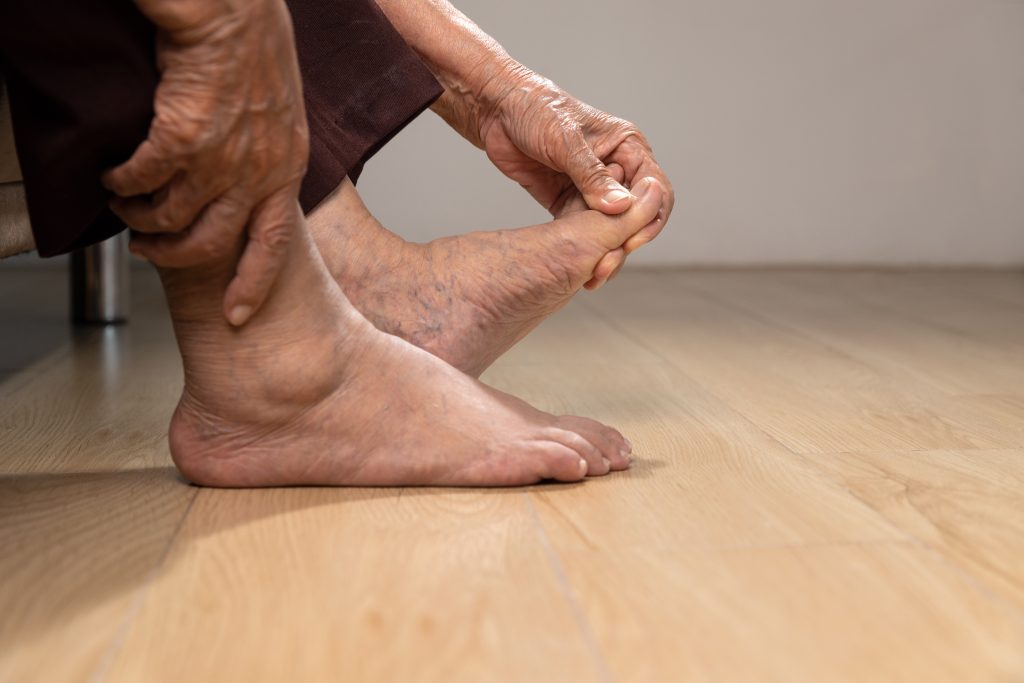
Your foot is designed to move. When you stand, the arch may lower under your weight. When you sit or rise onto your toes, it may spring back. This is called a flexible flatfoot.
Many people have this foot shape without pain or limitation. A large review of studies on flexible flatfoot found that the evidence does not support the use of orthotics for everyone. The authors found possible pain relief for adults, but also found major differences between studies and low certainty overall (Oerlemans et al., BMC Musculoskeletal Disorders).
What does that mean for you? A visible arch does not tell the whole story. Your foot can look flat and still work well. A mildly flat foot can also become sore after a long shift, run, or busy family day.
Think of your arch like a suspension bridge. It is meant to dip and rebound under load. The question is whether it shares the load comfortably.
Why overpronation can feel like a knee, hip, or back problem
Pronation is a normal part of walking. Your foot rolls in slightly to help soften impact. Overpronation describes more inward motion than your body currently manages comfortably. It is not a diagnosis; it is part of a bigger picture.
The overpronation movement may change how your ankle, shin, knee, and hip coordinate your movement. You might notice uneven shoe wear, fatigue feeling in your knees, or a hard-working calf and inner foot arch. You might also have no symptoms. A foot posture finding, like overpronation, cannot be proven to be the sole cause of pain higher up. However, it can be a big contributing factor.
This is why we look at the whole movement pattern rather than blaming your feet alone. A 2024 review found that gait retraining may reduce some measures of pronation, especially by changing foot progression or pressure under the foot. However, it included only 15 studies and 295 participants, and the researchers called for more research on long-term effects (Jafarnezhadgero et al., PLOS ONE).
Your body is more like a team. If your calf is stiff, hip is tired, or balance is uncertain, your foot may work harder. That gives us more than one useful place to help.
Do you need orthotics for flat feet?
Orthotics can be useful, but they are not a badge of failure or a lifelong requirement. They may reduce pressure, make shoes more comfortable, or give an irritated area time to settle while you build strength.
The research is more balanced than many advertisements suggest. A 2021 adult review found that most studies were small or methodologically weak. It concluded that there was not enough evidence for a routine orthotic recommendation for every adult (Herchenröder et al., Journal of Foot and Ankle Research).
Another network meta-analysis found that exercise and orthoses could both reduce adult pain. Exercise, alone or combined with orthoses, performed better than orthoses alone. None clearly changed navicular drop, a measure of how much the arch lowers under load (Hoang et al., International Journal of Environmental Research and Public Health).
Feeling better is often more important than changing your footprint. An orthotic is a tool. It does not need to permanently reshape your foot to be useful.
Your feet contain small muscles that help control the arch. Your calf, shin, posterior tibial, hamstring, and hip muscles also influence force through your leg. Strengthening does not mean forcing your arch rigid. It means helping your body handle load with more options.
Exercises may include short-foot work, controlled heel raises, calf strengthening, balance, and hip control. A short-foot exercise asks you to gently draw the ball of your big toe toward your heel without curling your toes. It should feel like a quiet lift, not a hard grip. This simple exercise has an effect on both your musculoskeletal system (muscles, tendons and ligaments) and your nervous system (control and stability).
A 2024 network meta-analysis of 11 studies found that several programmes improved arch shape and foot function in adults with flexible flatfoot. Posterior tibial strengthening, stretching, and broader lower-limb or hip work often ranked well. The studies varied in exercise type, dose, and outcomes (Jia et al., Scientific Reports). Leading to the thought that doing some strengthening or stretching is more important than finding one correct exercise.
A 2020 randomized study found that nine weeks of intrinsic foot, outer foot, and core strengthening reduced posture scores in 36 healthy adults with pronated feet. It measured posture, not pain or daily activity. That supports building capacity in your foot arch, not one identical programme for every painful foot arch (Martínez-Nova et al., International Journal of Environmental Research and Public Health).
Your feet can learn. They may not become perfectly arched, and they do not need to. They can become steadier and better prepared for your tasks.
Is exercise better than orthotics, or should you use both?
The better question is: what combination helps you move with less pain while building movement capacity?
If your foot is irritated, an insole may reduce the load enough to walk and exercise. If it is weak or easily fatigued, strengthening may help you keep control for longer. Limited ankle movement may need mobility work. A gradual gait change may help if running contributes to symptoms.
A 2023 randomised trial helps show why combinations can make sense. Forty adults used an insole alone or with six weeks of short-foot exercises. Both groups improved. The combined group had greater gains in pain reduction and function, although the study was small and short (Elsayed et al., European Journal of Physical and Rehabilitation Medicine).
This does not mean everyone needs an insole plus the same exercise plan. It means passive support and active training can complement each other. One can make your symptoms easier to begin exercise. The other can improve what your body can do over the long-term.
The exercise itself is only part of the answer. The dose matters too. Ten easy repetitions may be a warm-up for one person and a meaningful challenge for another.
A 2025 scoping review examined 87 studies and 300 foot and ankle exercises. Three sets of 10 repetitions, three times weekly, was common. Yet intensity was often underreported or lower than best-practice recommendations (Whittaker et al., Journal of Foot and Ankle Research).
What does that mean for you? Your plan should change as you adapt. We may begin seated if standing hurts, then progress to heel raises, balance, or single-leg work. We can adjust repetitions, resistance, rest, and frequency around your work, sport, age, and recovery.
Think of strengthening like a dimmer switch. You want enough challenge to create change, not so much that your body guards and becomes sore for days. A flare is useful information about the dose.
How we decide what your flat feet need
A useful assessment starts with your experience. We ask when pain began, what makes it worse, how far you can walk, and whether you have had ankle sprains. We also ask about shoes, training, work demands, sleep, and recovery.
Then we look at your feet in more than one position. We may compare sitting with standing, double-leg with single-leg heel raises, and quiet standing with walking. We may check ankle mobility, calf and hip strength, balance, coordination, and knee tracking.
Two people can have the same posture score and need different care. One may need reassurance. Another may need support, strengthening, or medical review. New one-sided collapse, swelling, weakness, or inability to rise onto your toes deserves proper assessment.
At Five Dock Osteopathic and Chiropractic Centre, our aim is not to make every foot look the same. We use movement screening to understand your needs. Your plan should match your goals, from running again to walking comfortably around the Inner West.
Where manual therapy fits with exercise
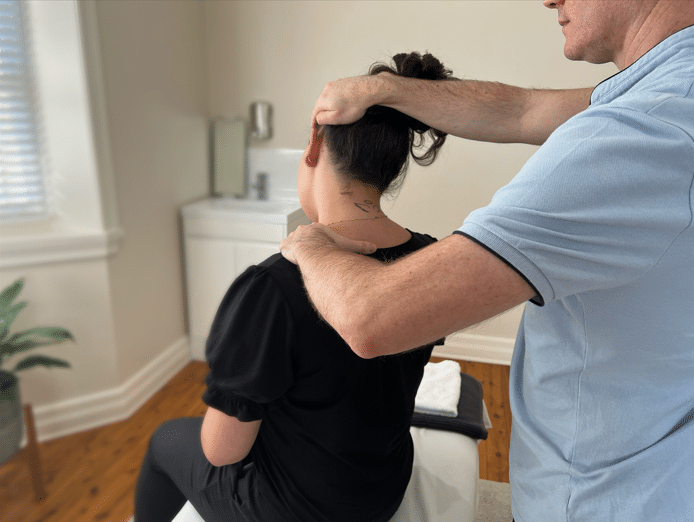
Hands-on care can help when pain, stiffness, or protective tightness makes movement difficult. Soft tissue work may make a sore calf easier to load. Joint mobilisation or adjustment may help a restricted ankle or foot move more comfortably when appropriate. Exercise then helps you use that movement in daily life.
Direct research on osteopathic or chiropractic treatment for flat feet is limited. A 2022 meta-analysis of acute lateral ankle sprains found that manual therapy plus exercise improved pain, movement, and function more than exercise alone. That supports a multimodal idea, but does not prove the same result for flat feet (Turolla et al., Journal of Clinical Medicine).
We do not use hands-on treatment to force your arch into place. When appropriate, it helps you move with less guarding. Then we build strength, balance, and confidence with a plan you can keep using.
When you should book an assessment
Consider an assessment if foot or ankle pain limits walking, running, work, or sport. Check in if your arch changed recently, one foot looks different, or ankle sprains keep returning. Persistent knee, hip, or back pain may also deserve a movement assessment.
You do not need to know whether you need orthotics. Bring your questions, usual shoes, and an honest description of what your body is doing.