What Is Shoulder Impingement, Really?
Shoulder impingement (sometimes called swimmer’s shoulder) happens when the tendons of your rotator cuff get compressed as they pass through the narrow space between the top of your upper arm bone and the underside of your shoulder blade. Every time you lift your arm, especially overhead, these tendons need room to glide smoothly. When that space narrows, due to inflammation, poor posture, or muscle imbalance, the tendons get pinched with every repetition.
Over time, this repeated friction leads to inflammation, stiffness, and a sharp or aching pain that tends to worsen with overhead activity, reaching behind your back, or even sleeping on the affected side. Left unaddressed, chronic impingement can progress into rotator cuff tendonitis or a more significant tear, which is why early, targeted care matters.
Why Neck Pain and Shoulder Impingement Are So Often Connected
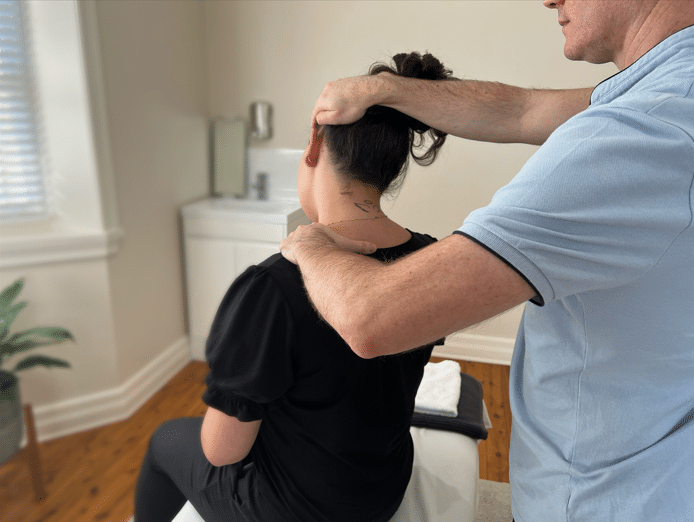
This is a detail many people miss. The neck and shoulder work as a single mechanical unit, not two separate problems. Restricted movement in your cervical spine (neck) directly affects how your shoulder blade sits and moves. If your neck is stiff, from long hours at a desk, poor sleep posture, or an old injury, your shoulder blade often compensates by sitting in a less-than-ideal position. This throws off the mechanics of your entire shoulder joint and narrows that already-tight space where your rotator cuff tendons travel.
This is exactly why anyone searching for the best neck and shoulder pain treatment in Five Dock needs a practitioner who looks beyond just the sore spot. Treating the shoulder in isolation while ignoring a restricted neck is one of the most common reasons people get short-term relief that keeps coming back. A proper assessment should always examine three connected regions: the neck, the shoulder blade, and the shoulder joint itself.
Common Causes of Shoulder Impingement
Understanding what’s driving your pain helps you avoid repeating the same mistakes once you start feeling better. The most frequent contributors include:
- Poor posture from desk work — rounded shoulders and a forward head position narrow the subacromial space over time.
- Repetitive overhead movement — common in swimmers, painters, tradespeople, and gym-goers who do a lot of pressing or overhead lifting.
- Weak or poorly activated shoulder blade muscles — when your scapula doesn’t move properly, your rotator cuff takes on stress it wasn’t designed to handle.
- Previous injury or trauma — a fall or sudden force can trigger inflammation that lingers if not properly rehabilitated.
- Age-related wear and tear — tendons naturally lose some elasticity over time, making impingement more likely.
Recognising these patterns is genuinely useful information whether or not you decide to seek treatment, because many of these risk factors are within your control.
Signs You Might Have Shoulder Impingement
- Pain when lifting your arm between roughly 60 and 120 degrees (often described as a “painful arc”).
- Discomfort that worsens at night, particularly lying on the affected shoulder.
- Weakness when reaching overhead or behind your back.
- A dull ache in the neck or upper back accompanying the shoulder pain.
- Reduced range of motion that seems to be getting worse rather than better.
If several of these sound familiar, it’s worth getting an accurate diagnosis rather than guessing at the cause, since shoulder pain can also stem from bursitis, tendonitis, a rotator cuff tear, or referred pain from the neck — each of which needs a slightly different approach.
Effective Ways to Treat Shoulder Impingement
The good news is that shoulder impingement responds well to the right combination of hands-on care and active rehabilitation. Effective treatment generally follows a logical sequence:
1. Restore movement first. Before anything else, the priority is easing the tension and stiffness that’s restricting your neck, shoulder blade, and shoulder joint. This is typically achieved through targeted soft tissue work and gentle joint mobilisation, which helps reduce pain and inflammation early on.
2. Address the whole chain, not just the sore spot. Since your neck movement, shoulder blade positioning, and shoulder joint all influence one another, lasting relief comes from treating all three together rather than just massaging the painful area.
3. Rebuild shoulder stability. Once movement improves, strengthening the muscles that stabilise your shoulder blade and rotator cuff is essential. The shoulder is the most mobile joint in the body, which means it depends heavily on muscular support rather than bony structure for stability.
4. Correct movement patterns. Learning how to move your shoulder correctly during daily activities, exercise, or work tasks significantly reduces your risk of the impingement returning.
5. Address contributing lifestyle factors. Simple changes — adjusting your desk setup, altering your sleep position, or modifying how you perform overhead exercises — can make a meaningful difference to your recovery and long-term shoulder health.
This staged approach reflects why searching for the best neck and shoulder pain treatment in Five Dock should lead you to a clinic that treats the underlying mechanics of your body, not just the symptom you walked in with.
Acute vs Chronic Shoulder Pain: Why the Approach Differs
If your shoulder pain has appeared suddenly, the initial focus is generally on calming inflammation and restoring pain-free movement as quickly and safely as possible. Chronic shoulder pain, defined as pain lasting longer than six months, is a different picture. Persistent pain can actually change how your nervous system processes sensory information, making the brain more sensitive to pain signals even after tissue has healed. This is why chronic shoulder and neck pain often needs a more comprehensive approach that includes retraining movement patterns and shoulder stability, which in turn helps recalibrate how your brain interprets pain signals.
When Should You See Someone About Shoulder Pain?
As a general guide, it’s worth seeking professional assessment if:
- Your pain has lasted more than a week or two without improvement.
- You’re losing range of motion or noticing ongoing weakness.
- Pain is disturbing your sleep.
- You’ve modified your daily activities to avoid using your shoulder.
- Over-the-counter pain relief is only providing temporary comfort.
Early assessment generally means a simpler, faster path to recovery. Waiting until pain becomes severe or chronic often means more time is needed to restore full function.