If you spend most of your day at a computer, your shoulders and chest are probably tighter than you realise. Over time, this “desk slouch” can contribute to neck pain, headaches, and that heavy, tired feeling between your shoulder blades.
This 30‑second doorway chest stretch is a simple, evidence‑informed way to open up the front of your chest, improve posture, and remind your nervous system what “upright” feels like.thesmartchiropractor+2
When we sit for long periods, the muscles across the front of the chest (pectorals) and front of the shoulders tend to shorten and tighten. At the same time, the muscles between the shoulder blades work harder to hold you up and can become fatigued. This imbalance encourages rounded shoulders and a forward head position, which increases strain on the neck and upper back.thesmartchiropractor+2
Reduce tension across the chest and shoulders
Make it easier to sit and stand taller with less effort
Decrease load on the neck and upper spine
Break up long periods of static posture during the workday
Find a doorway
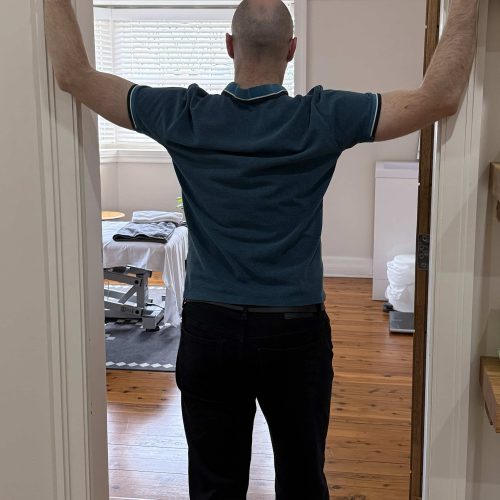
Stand in an open doorway with your feet about hip‑width apart.
Place your forearms on the frame
Bend your elbows to about 90 degrees and place your forearms on the door frame, elbows slightly below shoulder height.
Step through gently
Slowly step one foot forward and lean your body through the doorway until you feel a comfortable stretch across the front of your chest and shoulders. Avoid arching your lower back excessively.
Breathe and relax
Take slow, deep breaths. With each exhale, allow your chest to soften and your shoulders to drop away from your ears.
Hold for 30 seconds
Aim for a gentle to moderate stretch, not pain. Then step back and relax your arms by your sides.
Repeat 1–2 times
You can do this 2–3 times per day, especially before or after long computer sessions.
Keep it frequent, not forceful: Short, regular stretches are more effective than one long, aggressive session.thesmartchiropractor+1
Combine with movement breaks: Stand up, walk around, or do a few shoulder rolls every 30–60 minutes.ghlchiropractorsnapshot
Adjust the height: If the stretch feels too intense, raise your elbows slightly; if it’s too mild, lower them a little.
Watch your lower back: Avoid leaning from your lower back; the stretch should be felt in the chest and front of the shoulders.
Set a reminder to do this 30‑second doorway chest stretch mid‑morning and mid‑afternoon for the next week. Many patients notice their shoulders feel lighter and their posture improves within days.