Why Your Ankle Tightness Could Be the Hidden Cause of Your Knee Pain
Let me start with a simple, accurate idea. Your body is one big connected chain of movement.
When one link in that chain gets tight or weak, the links above have to work harder. Your ankle sits right below your knee in this chain. So when your ankle does not move well, your knee pays the price.
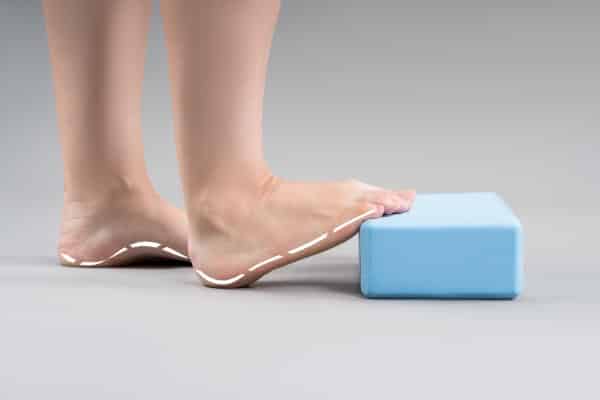
Research published in Applied Bionics and Biomechanics in 2024 found something important. When ankle dorsiflexion (that is your ability to bend your foot upward) is restricted, your knee absorbs more force during movement (Zhang et al., 2024). Think of it like a car with a stuck shock absorber. The road bumps do not disappear. They just get passed to the next part of the car.
A 2023 narrative review in the Electronic Journal of General Medicine confirmed this connection. Limited ankle dorsiflexion has been linked to a higher risk of knee injuries, ACL tears, and patellofemoral pain (Almansoof et al., 2023). If your ankle is tight, your knee has to compensate every time you walk, run, squat, or jump.
So if you have been dealing with that nagging dull pain in your knee, your ankle tightness may be where your injury starts.
How Weak Foot Strength Creates Knee Tightness and Pain
Now, the ankle can effect the knee. However, let’s talk about what happens below the ankle. Your foot has over 100 muscles, tendons, and ligaments. These structures control how force travels up through your leg with every step you take.
A 2023 randomised controlled trial published in the Brazilian Journal of Physical Therapy studied people with knee osteoarthritis. The researchers found that an eight-week foot and ankle strengthening program significantly reduced knee pain and improved physical function (Delpino et al., 2023). That is right. Strengthening the foot helped the knee.
The same study noted that people with knee osteoarthritis commonly have deficits in foot muscle strength, particularly in the muscles that control ankle inversion and eversion. When your foot muscles are weak, your foot rolls inward more during walking. This changes the angle of force at your knee. Over time, this can lead to knee tightness, achy pain, and even cartilage breakdown.
Your foot is the foundation of your entire body. When that foundation is not strong, the structures above it suffer.
Proprioception: The Movement Sensor You Did Not Know Your Knee Needed
Here is a word you might not have heard before: proprioception. It is your body’s ability to sense its position in space. Think of it as your internal GPS for movement.
Your foot and ankle are packed with proprioceptive sensors. These sensors send signals to your brain about the ground beneath you. They help you balance, react, and move safely. When these sensors are not working well, your risk of injuries goes up.
A 2024 randomised controlled study in the Journal of the American Podiatric Medical Association found that both strength training and balance exercises improved ankle proprioception in people with chronic ankle instability (Yekdaneh and Mutlu, 2024). Better proprioception at the ankle means better control of movement at the knee.
A 2024 review published in Sports Health also confirmed that proprioception plays a vital role in ankle stability and lower limb injury prevention (Contemporary Review: Proprioception in Ankle Stability, 2024). When your foot cannot sense the ground properly, your knee has to guess. And guessing leads to injuries.
This is why balance and coordination exercises are so important for your knee health. They retrain your proprioception from the ground up.
The Biomechanical Chain: How Tightness Below Causes Knee Injuries Above
Now, let’s put this all together. Your body moves in what researchers call a kinetic chain. Your foot hits the ground. Force travels up through your foot to your ankle, then your knee, hip, and finally your spine.
A 2024 scoping review published in Heliyon examined biomechanical changes in people with knee osteoarthritis. The researchers found significant deficits in ankle muscle strength, altered walking patterns, and increased knee loading in affected individuals (Li et al., 2024). The ankle and foot were directly implicated in how the knee was being stressed.
A 2024 randomised controlled trial published in Scientific Reports studied joint mobilisation for ankle instability. The researchers found that improving ankle joint mechanics through manual therapy led to better dorsiflexion, improved gait biomechanics, and reduced compensatory stress on the knee (Yin et al., 2024).
What does this mean for you? If your ankle is tight and your foot muscles are weak, your knee is absorbing forces it was never designed to handle alone. Your pain is not random. It is a predictable result of how your body is compensating.
How a Multimodal Chiropractic Approach Helps Your Knee Injuries Using Adjustments, Soft Tissue Therapy, and Exercise
So what can you actually do about this? This is where chiropractic care using a multimodal approach comes in.
A multimodal approach means we do not just do one thing. We combine adjustments, soft tissue therapy, and prescribed exercise to address the whole problem. Research supports this combined strategy.
A 2024 systematic review and meta-analysis in Systematic Reviews found that manual therapy was effective and safe for reducing knee pain in people with osteoarthritis (Zhu et al., 2024). The review noted that techniques including soft tissue work, mobilisation, and manipulation all contributed to pain relief.
This was further supported by a 2025 systematic review and meta-analysis published in Applied Sciences. Which confirmed that both manual therapy and strengthening exercises reduce pain in knee osteoarthritis, with manual therapy providing superior short-term outcomes (Serrano-Garcia et al., 2025). The strongest evidence supported combining hands-on treatment with exercise.
As a chiropractor, I can assess your ankle mobility, test your foot strength, and identify where your movement chain is breaking down. Then I can prescribe the correct exercise dosage for your foot and ankle strength. This means giving you the right amount of exercise at the right intensity. Not too little. Not too much. Just enough to create change without flaring up your symptoms.
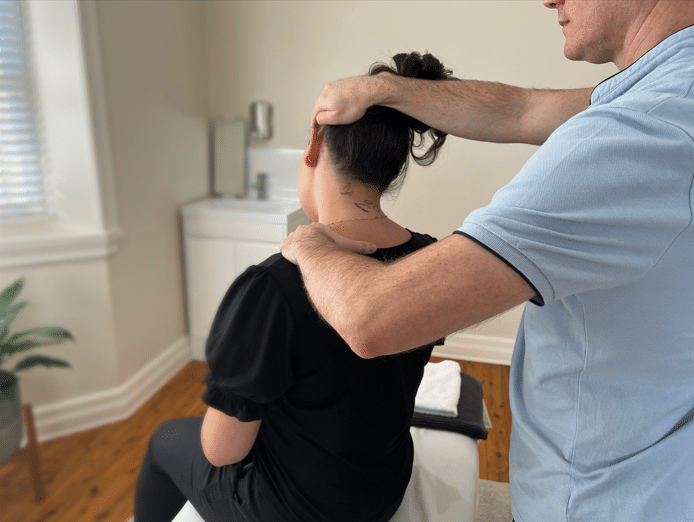
Chiropractic adjustments help restore joint movement. Your soft tissue therapy releases muscle tightness and fascial restrictions. Your exercises rebuild strength and proprioception. Together, these three elements give your knee the support it needs to heal.
A Corrective Exercise Approach to Ankle Tightness and Foot Strength for Knee Pain Relief
A 2024 randomised controlled trial published in PLOS ONE studied female athletes with limited ankle dorsiflexion. The researchers found that a comprehensive corrective exercise program significantly improved ankle function and reduced injury risk factors (Bigdeli and Yalfani, 2024). The program included a combination of stretching, strengthening, and balance work.
This aligns perfectly with what I do in practice. When you come in with knee pain, I look beyond just your knee. I assess how your ankle moves. I test how strong your foot muscles are. I check your proprioception and balance.
Then I build a tailored plan that addresses every layer of the problem. This is not a one-size-fits-all approach. It is a plan designed specifically for your body, your pain, and your movement goals.
The Simple Version
Think of your body like a building. Your feet are the foundation. Your ankles are the first floor. Your knees are the second floor. If the foundation cracks or the first floor wobbles, the second floor takes the damage.
When your ankle is tight, your knee bends differently. When your foot muscles are weak, your knee absorbs extra stress. Over time, this creates that dull pain or achy pain you feel.
A chiropractor can help by loosening tight joints, releasing tight muscles, and giving you the right exercises to rebuild strength from the ground up.
Advanced Considerations
For those wanting a deeper understanding, there are some important nuances here. First, not all ankle tightness is the same. A 2025 clinical decision-making framework published in Frontiers in Sports and Active Living emphasised that clinicians need to differentiate between joint restrictions, soft tissue tightness, and neural tension when addressing ankle dorsiflexion limitations (Tourillon et al., 2025). A blanket stretching approach will not work for everyone.
Second, exercise dosage matters enormously. Too much load on a deconditioned foot can worsen symptoms. Too little will not create meaningful change. A chiropractor trained in exercise prescription can calibrate the right dose based on your current capacity.
Third, the research consistently shows that multimodal interventions outperform single-modality treatments. Combining manual therapy with exercise produces better outcomes for pain, function, and long-term joint health than either approach alone. This is why a chiropractor who offers adjustments, soft tissue therapy, and exercise together is well-positioned to address the full kinetic chain.