When Old Injuries Keep Aching
Many people carry an old back injury that never fully settled. You strained it lifting, twisting, or simply sleeping awkwardly. The tissues healed within weeks. Scans, if you had them, often looked unremarkable. Yet months or years later, the ache remains.
This is more common than you might think. Most long-term back pain is “non-specific.” That means it is not tied to clear damage on a scan. Up to nine in ten cases fit this pattern.
So why does it keep hurting? The answer often lies less in your back itself. It lies more in how your body and brain handle pain. When pain sticks around, the nervous system gets drawn into the process. Even after the first injury settles, that system can keep sounding the alarm.
We see this pattern often in clinic. Your original injury may be long gone. Still, your body treats the area as fragile and threatened. Understanding this shift is the first step toward change.
You may have been told your pain is puzzling or unexplained. That answer can feel dismissive and frustrating. But an unclear scan does not mean the pain is imaginary. It simply means the cause sits beyond what an image can show.
Proprioception: Your Body’s Built-In Position Sense
Here is a useful word to know: proprioception. It is your sense of where your body is, without looking. Close your eyes and touch your nose. You still know exactly where your hand sits. That quiet awareness is proprioception at work.
Your muscles and joints send this position data to your brain constantly. It keeps you upright, balanced, and moving smoothly. Your lower back plays a central role in this system. It helps you sense how your spine bends and shifts.
Research suggests that long-term back pain can blur these signals. Many people with ongoing pain show a poorer sense of their spine’s position. Their body then leans more on other regions for balance. The ankles, for example, may start doing extra work.
Here is what that means for you in practice. We might ask you to balance with your eyes closed. We might add a soft, wobbly surface under your feet. This gently removes the shortcuts your body relies on. It shows us how well you sense your spine without vision. From there, we can plan movements that sharpen your position sense again.
How Your Brain Learns and Remembers Pain
Pain is not a simple signal travelling straight from your back. Your brain decides how much pain you feel. It weighs many inputs at once. These include past injuries, current stress, and how safe you feel.
When pain continues for months, the nervous system can grow more sensitive. Scientists call this central sensitisation. Picture a volume dial that has been turned up too high. Now light pressure or ordinary movement can feel sore. The system overreacts to signals that should feel fine.
You might notice this in everyday ways. A long sit or a light bump can flare the area. Sometimes the pain spreads beyond the original spot. These are signs the alarm system has grown too eager.
Over time, the brain’s pain-processing regions can also change. Studies using brain scans show shifts in their structure and activity. Even the brain’s chemistry can look different. This helps explain why an old injury can produce a dull, achy pain. In a real sense, the system has “learned” the pain and kept it on file.
Your thoughts and feelings feed into this too. Worry, fear of movement, and low mood can all amplify pain. When you brace and avoid moving, the system stays on high alert. This is not a weakness or a personal failing. It is simply how a protective nervous system behaves.
This can sound discouraging, but there is real cause for hope. The brain stays changeable across your whole life. The same flexibility that locked in the pain can help unwind it. Your daily choices and movements slowly reshape the system. That is why what you do each day matters so much. Learning how pain works is part of this too. When you understand the alarm, it often feels less frightening.
Why Movement and Strength Training Help
If pain lives partly in the nervous system, movement becomes powerful medicine. Each time you move safely, you send your brain reassuring signals. Over weeks, this steady feedback can calm an over-protective system. Your body starts to relearn that movement is safe.
Think of a movement you have been avoiding, like bending forward. We do not force it or rush it. Instead, we build up to it in small, comfortable steps. Each successful step teaches your brain that the movement is safe.
Exercise is the most strongly supported treatment for long-term back pain. It can reduce pain and improve how you move each day. It may also lower the chance of future flare-ups. Few other treatments can claim such broad, lasting benefits.
Strength training deserves a special mention. Building strength around your spine, hips, and core gives the area better support. Stronger muscles share the load and steady your movements. This often eases the muscle tightness that travels with pain. Tightness is frequently your body guarding a sore area. As you grow stronger and more confident, that guarding tends to relax.
Here is the practical catch. The dose of exercise matters a great deal. Too little activity may not shift your pain much at all. Yet pushing too hard too soon can trigger a flare. A gradual, well-judged plan usually beats an all-or-nothing approach. This balance is exactly where guided care earns its place.
Everyday activity counts too, not just formal exercise. Walking, gardening, and gentle stretching all send helpful signals. The best plan is one you can keep up with. Consistency, over weeks and months, is what reshapes the system.
A Multimodal Chiropractic Approach: Hands-On Care, Movement, and Stress
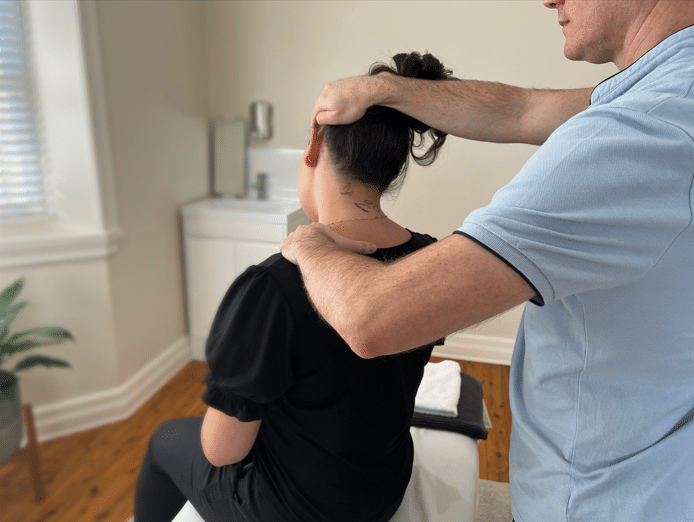
At our clinic, we rarely lean on a single tool. Our chiropractors often blends several approaches together. This may include soft tissue therapy, gentle joint adjustments or mobilisation, and exercise. Each part plays a different role in helping you move. Soft tissue work can ease tight, guarded muscles. Adjustments and mobilisation aim to help stiff joints move more freely. Exercise then builds the strength to hold those gains.
Let’s be clear about what the evidence shows. Exercise is the backbone, with the strongest support behind it. Hands-on care, added to exercise, can help you function better day to day. Recent research found that adding manual therapy improved people’s daily function. Its extra effect on pain, beyond exercise alone, is less certain. We share this openly so your expectations stay realistic.
So why combine these methods at all? For many people, hands-on care eases tightness and makes moving feel easier. That relief then helps you do the exercise that drives real change. A chiropractor can also guide the right exercise dose for you. We meet your body where it is today. Then we build up gradually, adjusting as your strength and confidence grow.
There is an intriguing frontier worth mentioning too. Early brain-imaging studies suggest hands-on therapy may influence pain processing. These studies are small and preliminary, so we treat them with caution. They hint at how deeply the body and brain stay connected.
Stress belongs in this picture as well. Persistent pain and stress tend to feed each other in a loop. A calmer nervous system often copes with pain more easily. Gentle, well-paced movement is one way to help settle that stress response. This link is still being studied closely. Even so, it fits what we notice with our patients each week.