Understanding What’s Really Happening to Your Neck
When you look down at your phone, your head moves forward. Studies show you maintain head flexion of 33-45 degrees when using your smartphone. Think about this: your head weighs about 5 kilograms. When you tilt it forward, the stress on your neck muscles increases dramatically.
Forward head posture involves upper cervical extension and lower cervical flexion, positioning your head’s center of gravity forward carrying a bowling ball close to your body versus holding it at arm’s length. Your neck muscles work much harder in the second position.
Using visual display terminals like smartphones for long periods can cause neck and back pain. Your muscles weren’t designed to hold this position for hours.
How Chronic Stress Affects Your Nerve Function and Pain
Your nervous system controls everything in your body. When you maintain poor posture, it doesn’t just affect your muscles. Forward head posture increases compressive loading on cervical spine tissues, particularly facet joints and ligaments.
This compression can interfere with how your nerves function. Think of your nerve system like a garden hose. When the hose gets kinked, water flow decreases. Similarly, when your spine is misaligned, nerve signals don’t flow optimally.
Forward head position while using smartphones has been identified as a risk factor for musculoskeletal pain, increasing tension on cervical structures. Your pain isn’t just in your head—it’s a real response to mechanical stress.
The chronic stress from holding your device creates a cycle. Your muscles tighten. Your joints compress. Your nerves send pain signals. Your body remains on high alert. This is where a multimodal approach becomes essential.
Why Movement Is Your Most Powerful Medicine
Here’s something important: exercise was beneficial for reducing pain and disability, regardless of exercise therapy dosage. This means any movement is better than no movement.
Your body needs motion to stay healthy. When you move, several things happen:
- Blood flow increases to your muscles
- Your joints receive nutrition
- Your nervous system recalibrates
- Muscle tension decreases
Combining different forms of manual therapy with exercise is better than manual therapy or exercise alone. is why a multimodal approach works so well.
How Multimodal Chiropractic Care Reduces Your Chronic Pain
Let me explain what multimodal chiropractic care really means. It’s not just one treatment. It’s a comprehensive approach that addresses your pain from multiple angles.
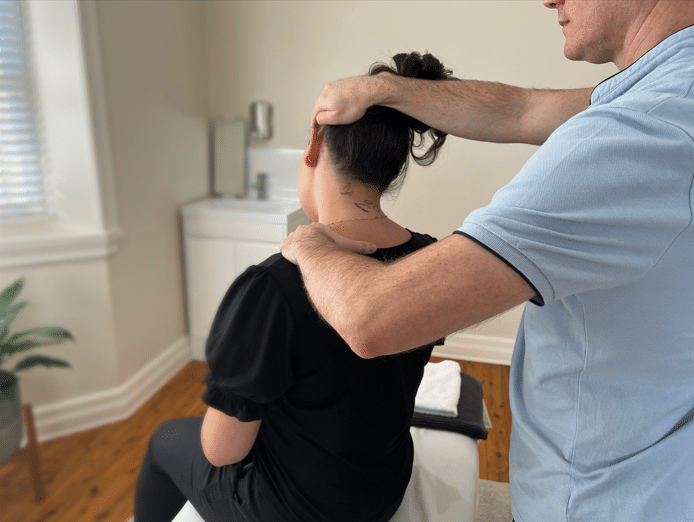
Soft Tissue Therapy: Releasing Muscle Tension
Hands-on soft tissue massage helps address muscle imbalances and adhesions that contribute to pain. Think of this as releasing knots in a tangled rope. Your muscles develop tight spots from chronic tension. Soft tissue work helps these areas relax.
This isn’t just about feeling good temporarily. When your muscles release, your joints move better. When your joints move better, nerve interference decreases.
Exercise Prescription: Building Strength and Resilience
Treatment of forward head posture requires correct posture, work environment, and exercise therapy. As chiropractors we don’t just treat you, we teach you how to help yourself.
Specific exercises strengthen the muscles that support your neck. Cervical isometric strengthening exercises progress to isotonic and dynamic strengthening. This means starting gently and gradually building strength.
You’ll also learn exercises for your shoulder blade muscles. Strengthening exercises for scapular retractors like rhomboids and middle trapezius, help correct the forward shoulder position that often accompanies tech neck.
The Movement-Nerve Connection
Here’s where it gets fascinating. Movement doesn’t just strengthen muscles. It actually affects your nervous system.
A single pre-exercise session of certain therapies induced an acute shift toward parasympathetic dominance. Your parasympathetic nervous system is your “rest and digest” mode. When this system activates, your body relaxes. Pain decreases. Healing accelerates.
Significant differences were seen in autonomic responses, including a decrease in diastolic blood pressure. This shows that hands-on care combined with movement creates real physiological changes. Your stress levels actually decrease.
Simple Chiropractic-Approved Moves You Can Start Today
Let me give you practical movements you can do right now. These exercises address the specific problems caused by device use.
1. Chin Tucks: Retraining Your Neck Position
This simple movement helps reverse forward head posture.
How to do it:
- Sit or stand with your back straight
- Keep your eyes looking forward
- Gently pull your chin straight back
- Imagine making a double chin
- Hold for 5 seconds
- Repeat 10 times
Do this movement every hour when using devices. It retrains your neck muscles to maintain proper position.
2. Shoulder Blade Squeezes: Strengthening Your Upper Back
Your upper back muscles counteract forward shoulders.
How to do it:
- Sit up straight
- Pull your shoulder blades together
- Imagine squeezing a pencil between them
- Hold for 5 seconds
- Release slowly
- Repeat 10 times
Manual therapy combined with exercise at the cervical and thoracic spine showed strong evidence for improving pain and function. These shoulder movements are essential.
3. Neck Rotation: Improving Mobility
Movement in all directions maintains healthy joints.
How to do it:
- Sit or stand comfortably
- Slowly turn your head to the right
- Hold for 3 seconds
- Return to centre
- Turn to the left
- Repeat 5 times each side
Never force movement into pain. Stay within comfortable ranges.
4. The 20-20-20 Rule: Breaking the Static Posture Cycle
Prolonged periods of flexed neck posture are linked to neck and shoulder pain. Breaking up continuous device use is crucial.
The rule:
- Every 20 minutes
- Look 5 metres (20 feet) away
- For 20 seconds
This simple habit interrupts the static holding pattern. Your muscles get a break. Your eyes rest. Your stress decreases.
5. Upper Chest Stretches: Opening the Front Body
Forward posture tightens your chest muscles.
How to do it:
- Stand in a doorway
- Place your forearms on the door frame
- Step one foot forward
- Lean gently forward until you feel a stretch across your chest
- Hold for 30 seconds
- Repeat 3 times
Creating Lasting Change: Your Movement Routine
Exercise interventions can effectively prevent episodes of neck pain. Prevention is always easier than treatment. Here’s how to build a sustainable routine:
Morning (5 minutes):
- 10 chin tucks
- 10 shoulder blade squeezes
- Gentle neck rotations
During device use:
- 20-20-20 rule every 20 minutes
- Chin tucks hourly
- Stand and move every hour
Evening (5 minutes):
- Upper chest stretches
- Shoulder blade squeezes
- Gentle neck movements
Consistency matters more than perfection. Even 5 minutes daily creates change.
When to Seek Professional Chiropractic Care
Sometimes your pain needs more than self-care. Consider professional help when:
- Your pain persists despite movement strategies
- Pain radiates down your arms
- You experience numbness or tingling
- Headaches become frequent
- Your movement becomes limited
A chiropractor takes a multimodal approach to your care. Spinal adjustments is recommended in combination with exercise for neck pain as part of a multimodal approach. This means addressing your pain from multiple angles.
Your chiropractor will assess:
- Your posture and movement patterns
- Muscle imbalances and tension
- Joint mobility and function
- Your nervous system’s stress response
- Your daily habits and ergonomics
Patients receiving multimodal chiropractic care experienced improvements in pain and disability scores. The comprehensive approach addresses the root causes, not just your symptoms.
Understanding the Bigger Picture
Your neck pain from device use isn’t just a local problem. It reflects how chronic stress affects your entire body. Smartphone addiction and overuse are associated with musculoskeletal disorders, especially in the neck and upper limbs.
This isn’t about eliminating technology. It’s about using it wisely. Your body adapts to the positions you hold most often. When you spend hours daily in forward head posture, your body accepts this as normal.
The solution? Move more. Move often. Move in different directions. Your nervous system needs variety. Your muscles need changing positions. Your joints need movement to stay healthy.
Various exercise types used in chronic neck pain showed effectiveness for reducing pain and disability. This means you have options. Find movements you enjoy. Build them into your daily routine.
Remember: your pain is real, but it’s also changeable. Small consistent actions create big results over time.
.