Pain and Damage Don’t Always Match Up
Here’s something that might surprise you: research using brain scans and imaging shows that how much pain someone feels often doesn’t match up with what’s happening in their tissues. You can have a scan that looks perfectly normal and still be in significant pain. Or you can have a scan that shows wear and tear but feel no pain at all. In fact, the gap between the amount of tissue damage and the amount of pain and disability a person experiences is now recognised as one of the biggest challenges in pain medicine (Nijs et al., 2021; Kaplan et al., 2024).
This is a really important finding, because it tells us that pain is more complicated than just “something is broken.”
So Where Does Pain Actually Come From?
In 2020, the International Association for the Study of Pain (IASP), the world’s leading body on pain research, updated its official definition of pain for the first time in over 40 years. The new definition describes pain as “an unpleasant sensory and emotional experience associated with, or resembling that associated with, actual or potential tissue damage.” Importantly, the accompanying notes make clear that pain is always a personal experience, shaped by biological, psychological, and social factors, and that pain and tissue damage are not the same thing (Raja et al., 2020).
Think of your pain system like an alarm system in a house. When everything is working well, the alarm goes off when there’s a real threat, like a fire. But sometimes alarm systems become overly sensitive and start going off when someone just burns toast, or even for no reason at all.
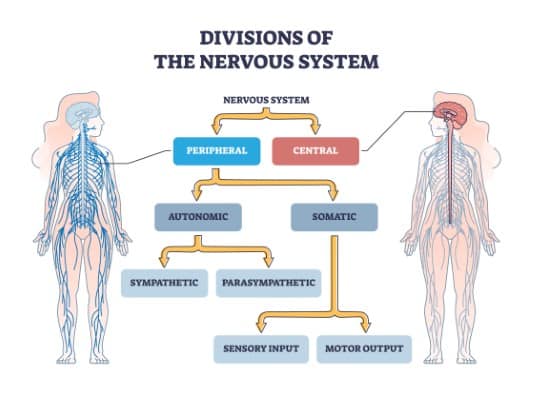
When pain becomes persistent, something similar can happen in your nervous system. The brain and spinal cord can undergo changes in the way they process signals from the body. Researchers call this central sensitisation, essentially, the nervous system’s “volume dial” gets turned up, and signals that should feel normal or mild can start to feel painful or threatening. A major 2021 review in The Lancet Rheumatology confirmed that features of central sensitisation have been documented across many common pain conditions, including osteoarthritis, fibromyalgia, spinal pain, tendon problems, and headache (Nijs et al., 2021).
This Doesn’t Mean the Pain Is Imagined
This is a critical point: just because pain is driven by changes in the nervous system rather than by ongoing tissue damage does not mean it’s “all in your head” or made up.
Scientists now use the term ‘nociplastic pain’ to describe pain arising from altered processing in the nervous system, despite no clear evidence of tissue damage or nerve injury. A comprehensive 2024 review in Nature Reviews Neurology showed that nociplastic pain involves real, measurable changes in brain function and structure, immune system processing, and peripheral nervous system activity (Kaplan et al., 2024). Brain imaging studies have revealed altered connectivity between brain regions, changes in how the brain filters and amplifies sensory signals, and disrupted pain-dampening systems.
In other words, the pain is absolutely real; it’s just being generated and maintained by a sensitised nervous system rather than by ongoing injury.
What Keeps the Nervous System Sensitised?
If the problem is a nervous system that’s become overly sensitive, the next question is: what keeps it that way? Research has identified several factors that can feed into and maintain this heightened state, including:
- Poor sleep: not getting enough quality sleep keeps the nervous system on high alert
- Ongoing stress: prolonged stress activates the body’s threat systems
- Not moving enough: reduced physical activity can increase the nervous system’s sensitivity
- Fear of movement: avoiding activity because you’re worried it will cause more damage (this actually tends to make things worse)
- Disruption of the autonomic nervous system: the system that controls automatic body functions like heart rate and digestion can become dysregulated
These risk factors were confirmed in the 2024 Nature Reviews Neurology review, which identified sleep disturbance, psychological distress, reduced physical activity, and autonomic dysfunction as key contributors to the nociplastic pain phenotype (Kaplan et al., 2024). The 2021 Lancet Rheumatology review similarly emphasised that central sensitisation is influenced by a wide range of biological and psychosocial factors (Nijs et al., 2021).
Why Scans and Structure-Only Treatments Often Fall Short
This understanding of how pain works also explains why just looking at imaging (like X-rays or MRIs) often doesn’t give the full picture. If the nervous system itself has become sensitised, then the pain isn’t necessarily coming from a structural problem that a scan would pick up.
It also explains why treatments that focus only on fixing a body part, like repeated injections or surgery targeting a specific area, sometimes provide limited or only temporary relief for persistent pain. The IASP’s classification of chronic primary pain recognises this explicitly, noting that pain can persist with significant emotional distress and functional disability even when no other diagnosis better accounts for the symptoms (Nicholas et al., 2019; Treede et al., 2019).
A Better Way to Understand and Treat Pain
Modern pain science uses what’s called a biopsychosocial approach. That’s a big word, but it simply means that pain is understood as being shaped by three types of factors working together:
- Biological: what’s happening in your body and nervous system
- Psychological: your thoughts, emotions, stress levels, and beliefs about pain
- Social: your work situation, relationships, support network, and daily routines
The revised 2020 IASP definition of pain explicitly reflects this framework, noting that pain is “always a personal experience that is influenced to varying degrees by biological, psychological, and social factors” (Raja et al., 2020). Rather than viewing pain as a straightforward signal of tissue damage, this approach recognises that pain is a complex experience produced by the brain based on many different inputs.
What Does Effective Recovery Look Like?
Based on current evidence, the most effective strategies for managing persistent pain tend to include a combination of approaches rather than a single treatment:
- Understanding your pain: learning how pain works (like reading this article!) is one of the most powerful tools for recovery. A 2024 meta-analysis found that pain neuroscience education combined with exercise or physiotherapy significantly reduced both pain and disability in people with chronic low back pain (Ma et al., 2024).
- Graded movement and exercise: gradually increasing activity in a safe, structured way
- Sleep improvement: working on sleep quality and habits
- Nervous system regulation: strategies to calm an overactive stress response
- Functional restoration: focusing on returning to meaningful daily activities rather than just chasing pain relief
The evidence supports combining these strategies. Both the Lancet Rheumatology review and the Nature Reviews Neurology review emphasise that pharmacological and non-pharmacological approaches targeting central sensitisation and nociplastic mechanisms, including exercise, education, sleep management, and psychological support, produce better outcomes than single-target treatments (Nijs et al., 2021; Kaplan et al., 2024).
When to Seek a Comprehensive Pain Assessment
If you’ve been dealing with ongoing pain despite scans that look normal, or if you’ve tried multiple treatments without lasting improvement, a comprehensive pain assessment may be helpful. This kind of assessment looks beyond just the body part that hurts and explores all the factors that might be contributing to your pain, including nervous system sensitivity, sleep, stress, movement patterns, and beliefs about pain.
Understanding the real mechanisms behind your pain is the first step towards finding a safer, more effective path to recovery.