Understanding Your Gastrocnemius and Calf Muscles
Your calf has two main muscles working together. The gastrocnemius sits on top, visible under your skin. The soleus muscle is found deeper within the calf ISSA. These muscles connect to your heel through the Achilles tendon.
Think of these muscles like powerful springs. They help you walk, run, and jump every day. Your gastrocnemius crosses your knee joint, making it unique. The gastrocnemius originates from above the knee so in order to stretch it the knee must be fully extended CU Anschutz Medical School.
The soleus works differently than its partner above. It doesn’t cross your knee, focusing only on your ankle. Together, they create the push-off power you need. Without them, simple walking would be impossible.
When Tightness Becomes Your Daily Companion
Tight calves don’t appear overnight in most cases. One reason for a tight calf is engaging in a repetitive activity, such as running ISSA. Your muscles adapt to what you ask of them. Sometimes they adapt by becoming shorter and tighter.
Morning stiffness is a common complaint I hear. When the gastrocnemius is tight, the position of the knee can affect how the ankle moves Summit Orthopedics. You might feel like you’re walking on stilts first thing. This “start-up pain” happens because your muscles tightened overnight.
The symptoms of tight calves can vary depending on the severity of the tightness Coastsport. You might notice aching, cramping, or a hard feeling. Some people describe it as wearing invisible socks that are too small. Your walking pattern might change to avoid discomfort.
The Hidden Connection: Your Lower Back and Calf Muscles
Here’s something that might surprise you. Your calves don’t work alone in your body. External forces must be sequentially transmitted from distal body segments to more proximal ones during movement Musculoskeletal Key. Everything connects through what we call the kinetic chain.
The larger global muscles including the abdominal muscles and erector spinae, and hip abductors are vital to power generation MDPI. When your core isn’t working properly, your calves compensate. They take on extra work they weren’t designed for.
Think of your body like a tall building. If the foundation (your pelvis) isn’t stable, problems appear elsewhere. Hip instability or capsular laxity can trigger a whole spectrum of disorders Musculoskeletal Key. Your tight calves might be protecting an unstable hip or pelvis.
Recognizing Dull Pain and Achy Sensations
Not all calf pain feels the same. Dull, achy pain often indicates chronic tightness or overuse. The most common symptom felt in the calf in patients with calf tightness is muscle spasm and cramping pain Lfaclinic. This type of pain builds slowly over time.
Sharp pain tells a different story than dull aches. It might signal an acute injury needing immediate attention. I always ask patients to describe their pain precisely. The quality of your pain guides our treatment approach.
A 2019 study in the Journal of Korean Physical Therapy found that tight calves were associated with balance problems Hinge Health. When your calves hurt, your whole movement system suffers. You might avoid activities you once enjoyed.
Common Injuries from Chronic Tightness
Tight calves don’t just cause discomfort. They can lead to serious injuries over time. Tight calves can also alter your gait, leading to compensatory movement patterns Coastsport. These altered patterns stress other body parts unnecessarily.
Continuing to overuse tight calves can lead to more severe injuries Medical News Today. Achilles tendinopathy is one common result of chronic tightness. Plantar fasciitis often follows when calf tightness goes untreated. Even stress fractures can develop from the altered mechanics.
Your body is remarkably good at compensating for problems. But compensation has limits and eventually breaks down. That’s when injuries appear in unexpected places.
How Movement Patterns Affect Your Calf Muscles
The way you move matters more than you might think. Poor movement patterns can create or worsen calf tightness. Sometimes equinus is related to a bone blocking the ankle motion Berg DPM. Limited ankle movement forces your calves to work harder.
I often see patients who’ve developed bad habits. They might walk with their toes pointed out. Or they consistently favor one leg over the other. These patterns create imbalances that lead to tightness.
Poor ankle mobility, specifically limited dorsiflexion, is another contributing factor ISSA. When your ankle can’t bend properly, your calf compensates. This creates a cycle of tightness and limited movement.
Finding Pain Relief and Building Strength
Relief from tight calves is possible with the right approach. I recommend starting with gentle, consistent stretching. Watch Dr. Castro demonstrate the calf stretch in the video above to ensure correct form Summit Orthopedics. Proper form makes all the difference in stretching effectiveness.
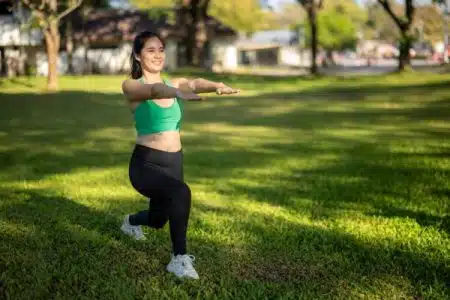
Strengthening exercises complement stretching for lasting results. Exercises that strengthen the calf muscle include: Calf raises ISSA. Start with body weight before adding resistance. Building strength helps prevent future tightness problems.
Heat and massage can provide immediate relief. Foam rolling helps many of my patients manage tightness. A 2020 review of 49 studies in the Journal of Bodywork and Movement Therapies found that foam rolling helps to loosen stiff muscles Hinge Health. Regular self-care prevents small problems from becoming big ones.
Your Chiropractor Can Help: A Multimodal Approach
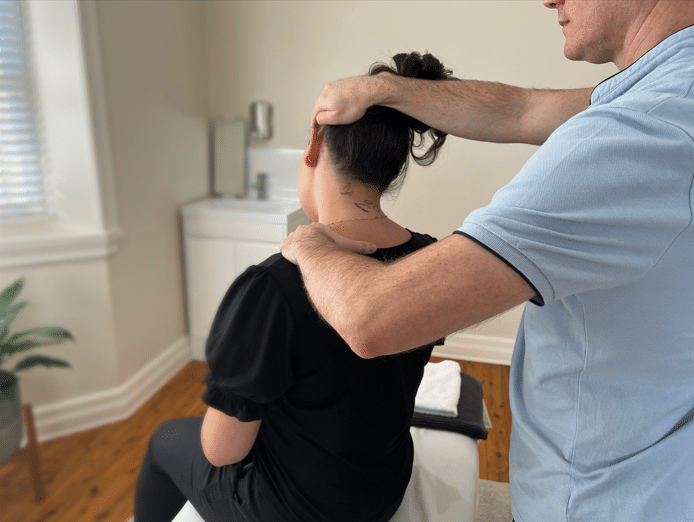
As a chiropractor, I use multiple techniques for calf problems. A multimodal treatment approach was utilized for all five athletes which included; soft tissue therapy (active release techniques [ART]), ischemic pressure, cross-friction massage, dry needling PubMed Central. Each technique serves a specific purpose in healing.
Chiropractic adjustments involve professional alignment and manipulation of the spine and joints Metro Health NYC. When your spine aligns properly, your whole body works better. This includes better nerve flow to your calf muscles.
For tendon injuries specifically, exercise prescription is crucial. Cyclic loading of human tendons within a 4.5–6.5% strain range effectively promotes increases in tendon stiffness PubMed Central. I carefully calculate the right exercise dose for each patient. Too much or too little won’t create the changes we need.
A single resistance training bout of isometric contractions reduced tendon pain immediately for at least 45 min postintervention PubMed. We might use isometric holds for immediate pain relief. Then we progress to eccentric exercises for long-term healing. Eccentric calf muscle training in non-athletic patients with Achilles tendinopathy Springer shows consistent positive results.