What Stress Really Does to Your Body
Stress is your body’s response to a demand or a threat. It does not matter if the threat is real or just in your mind. Your body reacts the same way each time. This reaction is run by a system called the HPA axis. HPA stands for hypothalamus, pituitary, and adrenal glands. Think of it as your body’s built-in alarm system. When the alarm goes off, your adrenal glands release stress hormones. The main one is cortisol. Adrenaline is another one you have probably heard of. These hormones raise your heart rate and sharpen your focus. They get you ready to deal with danger.
Short bursts of cortisol are not the problem. The trouble starts when your alarm system stays switched on. Many of us live with deadlines, traffic, and constant notifications. Our bodies cannot always tell the difference between a tiger and a tight schedule. So the alarm keeps ringing, day after day. Over time, this wears down your body. Researchers studying the HPA axis call this chronic dysregulation. In plain terms, it means your stress system stops working the way it should. That is when stress starts to affect your muscles, your sleep, and your mood.
Why Stress Leaves Your Muscles Tight and Achy
Here is something many people do not expect. Stress does not just live in your mind, it lives in your muscles too. A 2024 study put this to the test using a tool called electromyography, or EMG. EMG measures the electrical activity in your muscles. Researchers gave people a tricky maths test to raise their stress levels. At the same time, they measured activity in the trapezius muscle. That is the muscle across your upper back and shoulders. The result? Higher stress scores lined up with higher muscle activity (Christianto & Hermanto, 2024). In other words, when your mind tenses up, so do your muscles.
This matters because tight muscles often turn into dull, achy pain. You might notice it as a heavy feeling between your shoulder blades. Or a tight, sore neck that will not loosen up. This was tested in a lab using a short maths task, not real daily life. Still, it lines up with what I see in my clinic every week. Patients under pressure at work often carry pain in the same spots. Their neck and shoulders are usually the first to tighten. The link between stress and muscle tightness is not always simple. Pain can also come from old injuries, poor posture, or a sedentary day. That is part of why I always look at the full picture before deciding on a treatment plan.
How Movement Helps Lower Your Stress Hormones
Now for the part you came here for. Does movement actually help with stress? Recent research says yes, with one important catch. A large 2025 review looked at 44 studies on exercise and cortisol (Li, Huang, & Zhu, 2025). Across the board, exercise was linked to lower cortisol levels. The strongest effect was seen for stress itself, more than for anxiety or low mood. That is genuinely good news if stress is your main concern.
Here is the catch, and it is worth knowing. More exercise is not always better for your stress hormones. The same review found a dose that worked best, not the highest dose. Researchers measured this in MET-minutes, a way to track exercise effort over time. The sweet spot sat around 530 MET-minutes a week. In simple terms, that is close to 90 to 150 minutes of moderate movement weekly. That number lines up closely with national physical activity guidelines. Go far beyond that, and the benefit can flatten out or even drop. This is especially true with very intense training like HIIT.
A 2026 clinical trial backs this up over a longer timeframe. Researchers followed 130 adults for a full year (Gianaros et al., 2026). Half did 150 minutes of moderate aerobic exercise each week. The other half just received general health information. After a year, the exercise group showed a real drop in long-term cortisol. This is one of the first trials to show this over such a long period. It tells us that consistent, moderate movement adds up. You do not need extreme workouts to support your stress hormones. You need movement you can actually keep doing, week after week.
Strength Training and Building a Buffer Against Stress
Strength training deserves its own mention here. Lifting weights does more than build muscle and strength. A 2021 review looked at strength training in teenagers (Barahona-Fuentes, Huerta Ojeda, & Chirosa-Ríos, 2021). It found large drops in anxiety and low mood after strength programs. That is a big effect, even bigger than some aerobic exercise studies show. Interestingly, this review could not confirm the same result for stress specifically. Cortisol is hard to measure reliably in younger people. So strength training’s direct effect on stress hormones is still being studied.
What we do know is that strength training builds something valuable. Stronger muscles support your joints and protect you from future injuries. A strong back and stable core also reduce daily aches and pains. When your body feels capable, your mind often follows. I see this often with patients who add strength work to their week. They report feeling steadier and less rattled by daily pressures. That said, I always recommend easing into strength training carefully. The wrong load, too soon, can turn a helpful habit into a new injury.
Proprioception, or Why Your Body Needs to Feel Itself Move
Let me introduce a word you might not know yet: proprioception. Think of it as your body’s inner GPS. It is the sense that tells your brain where your back, hips, and legs are. You do not need to look down to know your foot is on the ground. That is proprioception working quietly in the background. When you have ongoing low back pain, this sense can go a little haywire. Your brain starts relying too much on input from your ankles instead of your spine.
A detailed 2025 study looked at this in people with chronic low back pain (Nyirö et al., 2025). Researchers gave one group spinal manipulation, the classic chiropractic adjustment. They compared this to gentle mobilisation and to no treatment at all. After a single session, spinal manipulation shifted proprioception back toward the lumbar spine. It also reduced pain more than the other two options. Here is an honest caveat worth knowing. The exact link between the proprioception shift and pain relief was not perfectly clear in the data. The researchers found both effects, but could not fully prove one caused the other in this single session. Even so, it is a promising clue about how your spine, brain, and pain signals talk to each other.
How a Chiropractor Helps You Move Better and Stress Less
This brings me to where I fit into your stress and movement plan. A 2021 narrative review looked closely at chiropractic spinal manipulation, called SMT (Gevers-Montoro et al., 2021). It compared SMT alone, exercise alone, and the two combined. The strongest evidence supported the combined, multimodal approach. That means hands-on care, like adjustments and soft tissue therapy, paired with the right exercise.
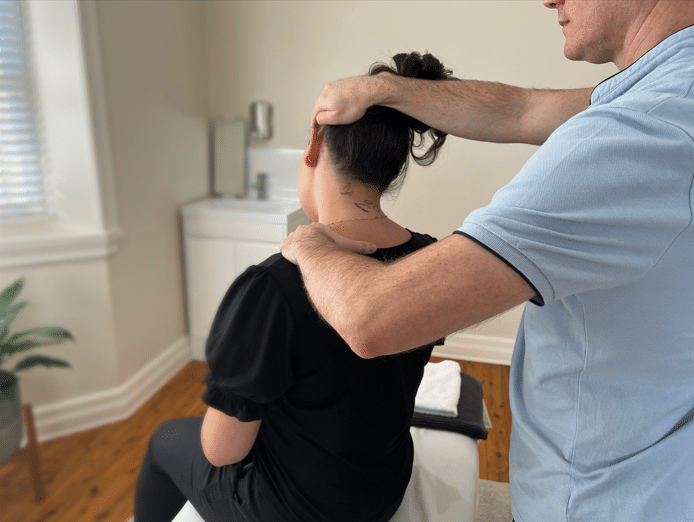
In my clinic, this is exactly how I work. I use hands-on techniques to ease tight, achy muscles and improve your range of motion. Then I prescribe movement at a dose that suits your body right now. This matters more than people realise. Jumping into too much exercise, too fast, can cause new injuries. Doing too little will not give your stress hormones the boost they need. A chiropractor’s job is to find your right amount, your “just enough” zone. We look at your pain, your tightness, your daily movement, and your goals. From there, we build a plan that supports both your spine and your stress levels. Movement genuinely helps stress, but it works best alongside guided, hands-on care.