Why an old ankle sprain can become chronic instability
A first ankle sprain can settle enough for daily life while leaving unfinished work behind. You might walk normally, yet still feel unsure when you land, turn, or balance. Chronic ankle instability usually means repeated sprains, ongoing symptoms, or giving way after the original injury.
This can involve two overlapping problems. Mechanical instability means the ligaments remain looser or damaged. Functional instability means the ankle feels unreliable without obvious looseness. Balance, muscle timing, strength, joint movement, and confidence can all contribute (Hong et al., *Journal of Clinical Orthopaedic Trauma*).
What does that mean for you? A normal-looking scan does not automatically explain everything. Your ankle may still need movement, strength, balance, and loading checks. The problem is not always one loose ligament.
Think of your ankle like a small team working under pressure. The ligaments provide passive support. Your muscles provide active support. Your balance system helps the foot react quickly. If one teammate is late, the others work harder. That can make uneven ground feel surprisingly threatening.
What giving way says about balance and proprioception
You may feel fine on a flat footpath, then wobble when a path slopes. You may also struggle with eyes closed or while reaching. These moments can reflect changes in proprioception, your sense of joint position and movement.
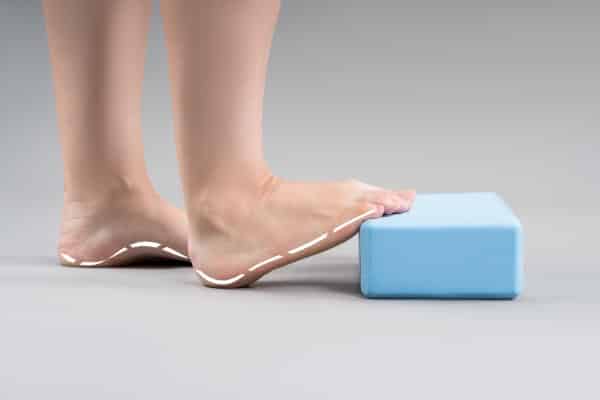
After an ankle sprain, the body may not respond as quickly to a sudden inward roll. Your peroneal muscles on the outer lower leg help resist that movement. Balance training gives your ankle repeated, controlled chances to practise those reactions.
A 2024 review of nine randomised trials included 341 people with chronic ankle instability. Balance training improved self-rated ankle stability compared with no training. It also improved sports function, although some balance outcomes varied widely between studies (Guo et al., *Systematic Reviews*).
Standing on a wobble board does not solve every ankle problem. Programs differed, and the review did not establish one perfect routine. Your starting point should match your symptoms, confidence, and daily demands.
Why ankle strength and hip control both matter
Ankle exercises matter, but your whole leg also helps control landing and force absorption.
Strength work can include the calf, the muscles around the ankle, and the muscles higher up. Hip control may matter during landing, stepping, running, and changing direction. The goal is not to blame your hip. It is to give your leg more options when the ground changes.
A systematic review of ten randomised trials included 368 recreational athletes with chronic ankle instability. Wobble-board work and hip strengthening produced some of the largest improvements on the Star Excursion Balance Test. Most studies were low quality, and long-term effects remained unclear (Ahern et al., *Archives of Rehabilitation Research and Clinical Translation*).
Here is what that means in practice. You may start with slow calf raises, resistance-band work, and supported balance. Later, you may add reaching, hopping, landing, or direction changes. Each step should feel challenging without making the ankle feel unsafe.
Why pain does not always mean new damage
An ankle can feel tight, sore, or guarded after a movement that once caused trouble. That sensation deserves attention, but it does not automatically prove a new tear. Your body can protect a familiar area when it detects a physical, psychological, or social threat.
This protective stress response can involve muscle tightness, guarding, and pain. The nervous system, sleep, mood, learned patterns, and the original injury can all contribute. This does not make your symptoms imaginary. It gives us more than one place to start.
Think of it like a cautious security guard. The guard may react quickly after a genuine break-in. Later, the same guard may become watchful around harmless noises. Gradual exposure can help the guard learn which movements are safe again.
What a chronic ankle instability assessment should include
You do not need to diagnose yourself before booking an assessment. You do need a clinician who looks beyond the place that hurts. We often begin by asking when the first sprain happened, how often the ankle gives way, and which activities you avoid.
An assessment may include walking, standing alignment, ankle range of motion, calf and peroneal strength, single-leg balance, and movement control. It may also include ligament tests and checks of the knee, hip, foot, and lower back. This helps separate mechanical looseness from functional control problems.
Persistent pain may involve an osteochondral injury, tendon problem, subtalar instability, or impingement. Imaging can assess associated injuries, but cannot diagnose chronic ankle instability alone (Hong et al., *Journal of Clinical Orthopaedic Trauma*).
Seek medical assessment quickly after a new injury with major swelling, deformity, numbness, or inability to take four steps. Ongoing night pain, repeated falls, or worsening symptoms also deserve review.
How treatment can rebuild confidence and mobility
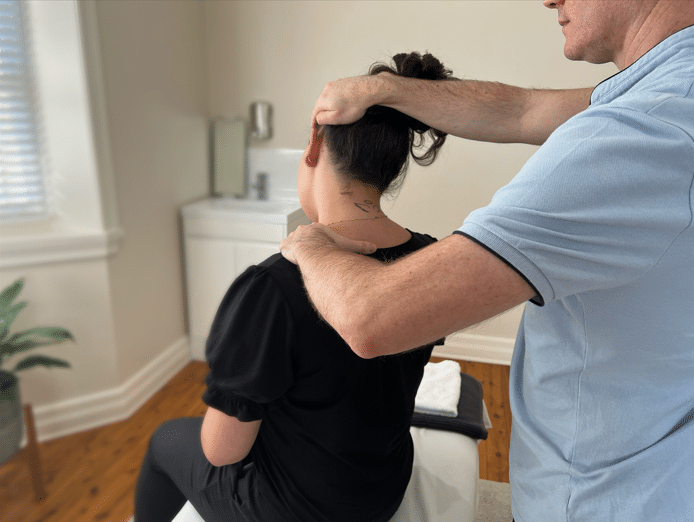
Treatment is not about forcing your ankle into a position. It is about helping you move with less fear and more control. Your plan may include hands-on care, joint mobilisation, soft tissue work, exercise, taping, or a brace.
Hands-on treatment can sometimes make movement feel easier in the short term. A 2022 review of nine randomised trials found that joint mobilisation improved dorsiflexion and dynamic balance in chronic ankle instability. It did not clearly improve patient-oriented function. Studies varied greatly, and long-term effects were not measured (Kim & Moon, *Journal of Functional Morphology and Kinesiology*).
That is an important distinction. A treatment can help you access movement without being the whole solution. You still need practice using that movement in daily life, work, or sport.
Research on manual therapy combined with exercise is more direct for recent lateral ankle sprains than for ankle instability years later. A 2022 meta-analysis included only three trials with 180 participants. It found better pain, function, and ankle movement when manual therapy was added to exercise. The programs differed, and the evidence does not prove that every chronic ankle will respond the same way (de Ruvo et al., *Journal of Clinical Medicine*).
Here is the practical takeaway. At Five Dock Osteopathic & Chiropractic Centre, we can combine assessment, manual care, joint techniques, and exercise planning when appropriate. We can also adjust the plan when your ankle needs a different dose. The evidence supports this as a sensible multimodal framework, but it does not support promising a single technique as a cure.
How much exercise should you do for an unstable ankle?
Doing too little may leave your ankle underprepared. Doing too much may create a flare that makes movement feel dangerous again. The right dose depends on your current strength, balance, pain response, work, sport, and confidence.
A useful starting point might be a few controlled minutes, several times each week. Your clinician may then add resistance, speed, height, or unstable surfaces. You may progress from supported balance to single-leg reaching, hopping, or sport-specific direction changes.
The 2024 balance-training review found no standard program that fits everyone. It also found differences in training frequency, intensity, and duration. That is why a practitioner should monitor your response instead of handing you a fixed list of exercises (Guo et al., *Systematic Reviews*).
Use the next day as information. Mild muscle tiredness can be expected. A sharp increase in swelling, pain, or giving way may mean the load was too high.
When a brace, referral, or further care may help
A brace or tape can provide extra support during a vulnerable stage. It may help you return to walking, work, or sport while your strength and balance improve. It should support your rehabilitation, not replace it.
Most people begin with conservative care. A 2023 clinical review describes rehabilitation as first-line treatment for functional and mechanical chronic lateral ankle instability. It also reports expert support for at least three months of appropriate rehabilitation before considering surgery (Hong et al., *Journal of Clinical Orthopaedic Trauma*).
Surgery is not the automatic next step. It may be considered when genuine mechanical instability remains after a well-delivered rehabilitation program. A referral is also sensible when pain suggests a fracture, cartilage injury, tendon tear, or another condition needing specialist care.
This is why a good assessment matters. It can reassure you when conservative care is reasonable. It can also identify when you need a different pathway.
Your next step after an old ankle sprain
You do not have to wait for another sprain before asking for help. If it limits sport, work, walking, or confidence, an assessment can clarify the pattern.
Bring the real-life problem with you. Tell your clinician whether you want to return to netball, walk trails, carry your child, or feel steady on stairs. Those details shape the treatment dose.
The aim is not perfect control every second. It is a stronger, more adaptable foot and leg. With assessment and gradual practice, an old sprain can become a starting point for rebuilding trust.