What Is Hip Clicking?
Hip clicking, medically known as snapping hip syndrome, happens when tendons or muscles move over bony parts of your hip joint. Think of it like a rubber band snapping over your finger – that’s essentially what’s happening inside your hip. Your hip is a ball-and-socket joint surrounded by strong muscles and tendons that help you move.
When these soft tissues become tight or inflamed, they can catch on bone structures. This creates the distinctive snapping or clicking sound you hear during movement.
The Three Types of Hip Clicking
Your hip clicking can happen in different areas, and knowing which type you have helps determine the best treatment approach.
External Hip Clicking
This is the most common type of hip clicking. It occurs when your iliotibial (IT) band – a thick piece of tissue running down the outside of your thigh – slides over a bony bump called the greater trochanter. When your hip is straight, the IT band sits behind this bump. When you bend your hip, the band slides over it, creating that distinctive snap.
You’ll typically feel this clicking on the outside of your hip during activities like walking, running, or getting up from sitting.
Internal Hip Clicking
Internal clicking happens when your iliopsoas tendon – a strong rope-like structure connecting your hip muscles to your pelvis – slides over bony parts inside your hip joint. This type often creates clicking in the front of your hip or groin area.
You might notice this when bringing your knee toward your chest or straightening your leg after bending it.
Intra-articular Hip Clicking
This less common type involves actual problems inside your hip joint, such as torn cartilage or loose bone fragments. Unlike the other types, this clicking often comes with pain and may cause your hip to lock up temporarily.
Why Does Hip Clicking Develop?
Several factors can contribute to your hip clicking developing over time.
Overuse and Repetitive Movements
If you’re a runner, dancer, cyclist, or participate in sports involving repetitive hip movements, you’re more likely to develop hip clicking. The constant friction and stress on your hip tendons can lead to inflammation and tightness.
Research shows that activities requiring frequent hip flexion and extension – like soccer, gymnastics, and running – significantly increase your risk of developing snapping hip syndrome.
Muscle Imbalances and Tightness
Weak hip muscles, particularly your gluteal muscles, can create imbalances that lead to clicking. When some muscles are stronger than others, it changes how your hip moves and can cause tendons to catch on bone structures.
Tight hip flexors from prolonged sitting can also contribute to your clicking by altering your hip mechanics.
Structural Variations
Some people are simply born with hip bone shapes that make clicking more likely. These anatomical variations can create environments where friction and catching occur more easily during normal movement.
Your unique bone structure might include slight changes in alignment or the presence of bony prominences that increase the likelihood of tendon snapping.
When Should You Be Concerned About Hip Clicking?
Most hip clicking is harmless and doesn’t require immediate medical attention. However, you should seek professional help if your clicking is accompanied by:
- Pain that interferes with daily activities
- Stiffness or limited range of motion
- Swelling around your hip joint
- Your hip “locking” or getting stuck
- Pain that worsens over time
Remember, early intervention often leads to better outcomes, so don’t hesitate to seek help if your symptoms concern you.
How Chiropractic Care Can Help Your Hip Clicking
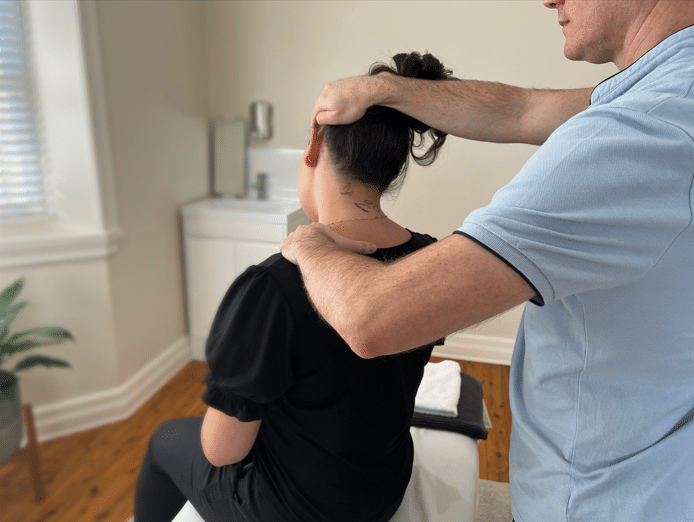
As your healthcare provider, I want you to know that chiropractic care offers effective, non-invasive solutions for hip clicking through an integrative approach. By using a combination of massage, joint mobilisation and functional movement exercises, we can put together a treatment plan which will alleviate your symptoms. So what will this look like for you:-
Comprehensive Assessment
During your evaluation, I’ll perform specific tests to determine exactly what’s causing your hip clicking. This includes assessing your movement patterns, muscle strength, and joint mobility to identify the root cause of your symptoms.
Manual Therapy Techniques
Chiropractic treatment for hip clicking often includes:
Joint mobilization and manipulation: Gentle adjustments to restore proper hip joint movement and reduce tension in surrounding structures.
Myofascial release: Targeted soft tissue techniques to address tightness in your hip flexors, IT band, and other contributing muscles.
Trigger point therapy: Treatment of specific muscle knots that may be contributing to your hip dysfunction.
Exercise Prescription and Movement Re-education
I’ll design a personalized exercise program focusing on:
- Strengthening weak hip muscles, particularly your glutes
- Stretching tight structures like your hip flexors and IT band
- Improving your overall movement patterns
- Core stability exercises to support proper hip function
Integrative Approach to Your Care
What sets chiropractic care apart is our whole-body approach. Your hip clicking might be related to issues in your lower back, pelvis, or even your foot mechanics. I’ll address these contributing factors to provide comprehensive treatment.
Research published in the Journal of Manipulative and Physiological Therapeutics demonstrated successful treatment of internal snapping hip syndrome using chiropractic manipulation combined with myofascial release and specific exercises.
Prevention Strategies for Hip Clicking
Preventing your hip clicking from developing or worsening is much easier than treating it once it becomes problematic. The key is addressing the underlying causes before they create significant issues. Here’s your comprehensive prevention plan:
Daily Movement and Stretching Routine
Morning Hip Mobility: Start your day with gentle hip circles and leg swings. This prepares your hip joints for the day ahead and helps maintain healthy movement patterns.
Hip Flexor Stretches: Since many of us spend hours sitting, your hip flexors become tight and shortened. Perform daily hip flexor stretches like the couch stretch or kneeling hip flexor stretch. Hold each stretch for 30 seconds and repeat 2-3 times.
IT Band Maintenance: Use a foam roller or perform standing IT band stretches daily. This prevents the tightness that often leads to external hip clicking.
Piriformis Care: This deep hip muscle can contribute to clicking when tight. Regular pigeon pose or figure-4 stretches help maintain healthy piriformis function.
Strengthening Your Hip Support System
Glute Activation: Weak glutes are a major contributor to hip clicking. Include exercises like clamshells, glute bridges, and side-lying leg lifts in your routine. Aim for 2-3 sets of 10-15 repetitions, 3-4 times per week.
Core Stability: A strong core supports proper hip function. Focus on exercises like planks, dead bugs, and bird dogs. Your core and hips work together as a team.
Hip Abductor Strengthening: These muscles on the side of your hip prevent internal collapse during movement. Side-lying leg lifts and resistance band exercises target these important stabilizers.
Activity and Lifestyle Modifications
Smart Training Progression: If you’re an athlete or regular exerciser, avoid sudden increases in training intensity or volume. Follow the 10% rule – increase your activity by no more than 10% per week.
Cross-Training Benefits: Vary your activities to prevent overuse. If you’re a runner, include swimming or cycling. If you cycle frequently, add some walking or strength training.
Proper Warm-Up Protocol: Always warm up before activities with dynamic movements like leg swings, hip circles, and walking lunges. This prepares your tissues for movement.
Cool-Down Commitment: End your workouts with static stretching, focusing on your hip flexors, quads, and IT band. This helps prevent tightness from setting in.
Workplace and Daily Life Strategies
Combat “Sitting Disease”: Set hourly reminders to stand and move. Even 2-3 minutes of walking or hip stretches can make a significant difference.
Ergonomic Setup: Ensure your workstation supports good posture. Your hips should be slightly higher than your knees when seated.
Sleep Position Awareness: Sleeping with a pillow between your knees can help maintain proper hip alignment throughout the night.
Proper Footwear: Worn-out shoes or poor foot mechanics can affect your entire kinetic chain, including your hips. Replace shoes regularly and consider professional gait analysis if needed.
Early Warning Signs to Watch For
Listen to Your Body: Pay attention to subtle changes in how your hip feels. Mild stiffness or occasional clicking without pain might indicate the need for more stretching or strengthening.
Movement Quality Check: Regularly assess your movement patterns. Do you favor one side? Has your walking pattern changed? These could be early signs of developing issues.
Professional Maintenance: Consider regular check-ups with healthcare providers like chiropractors or physical therapists, especially if you’re very active. Prevention is always more effective than treatment.
Remember, consistency is key with prevention strategies. Small daily efforts are much more effective than occasional intensive sessions. Your hips will thank you for the regular attention and care.