What Is Muscle Tightness and Stiffness Really?
Let’s start with the basics. Your muscles aren’t just passive tissues waiting for orders. They have a baseline level of tension called muscle tone. Think of it like the idle speed on a car engine. Your muscles always maintain some activity, even when you’re resting.
Research published in Frontiers in Neuroscience (2024) shows this isn’t simple. Your brain constantly adjusts muscle tone through complex feedback systems. When this system gets disrupted, your muscles can stay tight. They may feel stiff even when there’s no physical damage.
How Your Nerves Control Muscle Tightness and Movement
Here’s where it gets interesting. Your muscles don’t decide on their own when to tighten. Your nervous system controls everything. Inside your muscles are special sensors called muscle spindles. These sensors detect stretch and movement. They send constant messages to your brain about your body’s position.
A 2023 review in the Annual Review of Physiology explains this beautifully. Your muscle spindles create a feedback loop with your brain. Your brain sends signals down to contract your muscles. Your muscles send signals back about their current state. This two-way conversation happens thousands of times per second.
When this feedback loop works well, your muscles feel relaxed. When it doesn’t, you feel tight even without injury.
The Brain-Muscle Connection: Why Pain Creates More Stiffness
Your brain is constantly learning. This ability to change is called neuroplasticity. It’s usually a good thing. But sometimes your brain learns unhelpful patterns.
Research in Current Neuropharmacology (2023) describes central sensitisation. This is when your nervous system becomes overly reactive. Think of it like a volume dial stuck on high. Normal signals get amplified. Your muscles tighten up even when there’s no real threat.
The Brazilian Journal of Physical Therapy (2023) confirms this pattern. Chronic muscle pain conditions often involve this brain amplification. Your pain is real, but its source may be in your nervous system.
Common Causes of Chronic Muscle Tightness and Pain
Several factors can trigger ongoing muscle tension. Prolonged sitting causes your hip flexors and hamstrings to shorten over time. Repetitive movements mean the same muscles work overtime while others weaken. Poor sleep prevents your muscles from getting proper recovery time. Stress keeps your nervous system on high alert. Previous injuries can cause your brain to guard injured areas long after healing.
A 2022 study in Orthopaedic Nursing found something important. Muscle tightness significantly impacts daily activities. Simple tasks become difficult. Quality of life suffers.
How a Chiropractor Uses Multimodal Treatment for Muscle Stiffness
Here’s the exciting part. Research shows that combined treatments work best for muscle tightness. A multimodal approach uses several techniques together. The Journal of Clinical Medicine (2024) reviewed over 6,000 research articles. Clinical guidelines now recommend spinal manipulation for back and neck pain. But the strongest evidence supports combining treatments. Let me explain what this looks like in practice.
Soft Tissue Therapy for Muscle Tension Relief
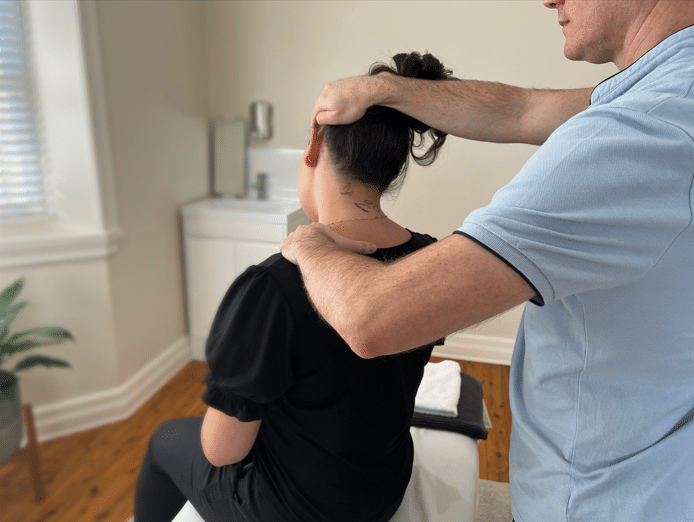
Soft tissue work targets your muscles directly. A 2024 systematic review examined massage therapy for pain. The evidence supports its use for muscle-related conditions. Techniques like trigger point therapy release tight spots. Myofascial release addresses the connective tissue around muscles. These hands-on approaches help reduce local muscle tension quickly.
Chiropractic Adjustments and Nervous System Function
This is where chiropractic shines. Spinal adjustments don’t just crack joints. They influence how your brain communicates with your muscles. Research by Dr Heidi Haavik has studied this extensively.
A 2024 study in Brain Sciences showed remarkable findings. Chiropractic care produced neuroplastic responses in patients. This means the brain changed how it processed sensory information. Patients reported improvements in pain, mood, and sleep.
Earlier research showed spinal adjustments affect your prefrontal cortex. That’s the brain’s command centre for coordinating movement. By improving this brain function, muscle control improves too.
Exercise Prescription: The Right Dose for Movement and Strength
Exercise is medicine. But dosage matters. Too little won’t help. Too much can make things worse. A 2024 analysis in Frontiers in Medicine reviewed global research. Physical activity helps relieve muscle stiffness and discomfort. It improves flexibility and blood flow to tissues.
But here’s what makes the difference. A 2023 umbrella review found exercise prescription is often unclear. Many people exercise without knowing the right type or amount. This is where a chiropractor can help. I can assess your specific needs and prescribe targeted exercises. We work out the right frequency, intensity, and duration.
Core strengthening reduces load on your spine. Stretching improves flexibility without overdoing it. The combination of treatment and personalised exercise produces the best results.
Why Combined Chiropractic Treatment Works Better for Pain Relief
Research from Frontiers in Pain Research (2021) is clear. Spinal manipulation combined with massage and exercise shows the strongest evidence. This multimodal approach addresses muscle tightness from multiple angles. Soft tissue therapy releases local muscle tension. Adjustments improve your brain-body communication. Exercise builds strength and maintains improvements.
It’s like attacking the problem from three directions at once. Each treatment amplifies the others. Your results last longer.