How Your Ligament Receptors Create the Stiffness Sensation
Your ligaments contain special sensors called mechanoreceptors. These tiny receptors monitor everything happening in your joints. They detect position, movement, and tension. When you move, these receptors send constant information to your brain about what your joints are doing.
Think of mechanoreceptors as security cameras for your joints. They’re always watching and reporting back to headquarters—your brain. Research shows that your anterior cruciate ligament alone contains mechanoreceptors in 1-2% of its volume. These receptors include Ruffini corpuscles, Pacinian corpuscles, and free nerve endings.
Each type of receptor has a specific job. Ruffini corpuscles respond to sustained pressure and help you sense joint position when you’re still. Pacinian corpuscles detect quick changes in pressure during rapid movements. Free nerve endings alert you to pain and inflammation. Together, they create a comprehensive monitoring system for your joint health.
When your ligaments experience unusual stretching or loading, your mechanoreceptors fire signals to your brain. Your brain interprets these signals as a potential threat to joint stability. This interpretation triggers your protective response system.
The Brain-Muscle Feedback Loop That Causes Your Joint Tension
Your brain doesn’t just receive information from your ligament receptors—it responds immediately. The central nervous system processes these signals at multiple levels. Your spinal cord, cerebellum, brainstem, and motor cortex all participate in creating your protective response.
This response activates the muscles surrounding your joints. Your brain essentially tells your muscles to tighten up and protect the area. This muscle activation is automatic—you don’t consciously control it. Research from 2025 confirms that this sensorimotor system creates functional reorganization in your nervous system after ligament stress.
The system works like a feedback loop. Your ligament receptors detect tension. They send signals to your brain. Your brain activates your muscles. These muscles contract and create the stiffness you feel. This entire process happens in milliseconds.
Your quadriceps, hamstrings, and calf muscles can all tighten in response to knee ligament signals. Your neck and shoulder muscles respond to cervical spine ligament input. This protective muscle guarding serves an important purpose initially—it prevents further injury.
However, this protective pattern can persist long after your initial problem has healed. Your nervous system can maintain heightened muscle activation even when your tissues are no longer damaged. This creates chronic stiffness that limits your movement and causes discomfort.
How Mechanical Ligament Stiffness Develops After Your Injury
Your ligaments can also develop actual mechanical stiffness. This differs from the muscle-mediated stiffness described above. After trauma, your ligament tissue undergoes physical changes in its structure and properties.
Ligaments are made of collagen fibers arranged in specific patterns. These fibers normally have some flexibility and elasticity. When you injure a ligament, your body repairs it with scar tissue. This scar tissue has different mechanical properties than healthy ligament tissue.
Studies demonstrate that ligament stiffness—the slope of the load-deformation curve—changes significantly after injury. The tissue becomes less able to stretch and absorb forces. This mechanical stiffness restricts your joint movement directly. Your joint physically cannot move as far because the ligament tissue has become less pliable.
Research shows that ligament mechanical properties also vary with age and other factors. Younger ligaments are generally more elastic. As you age, your ligaments naturally become stiffer. Conditions like diabetes and rheumatoid arthritis can further alter ligament mechanical properties.
Post-injury mechanical stiffness compounds the neurological stiffness from muscle guarding. You end up with both tissue-level restriction and nervous system-mediated protection. Both contribute to your overall stiffness sensation and movement limitation.
Why Prolonged Desk Sitting Creates Joint Stiffness in Your Body
When you sit at your desk for long periods, multiple changes occur in your joint system. Your ligaments, muscles, and fascia all respond to sustained positioning. These responses create the stiffness you feel when you finally stand up.
During sitting, your knee joints typically flex at 90 degrees or more. This position doesn’t place significant tension on your ligaments. However, it does reduce synovial fluid movement in your joints. Synovial fluid lubricates your joint surfaces and nourishes your cartilage.
Without movement, this fluid becomes less effective. Your cartilage experiences sustained pressure in specific areas. The reduced fluid flow creates localized stiffness in your joint tissues. Research indicates this stiffness appears after relatively short periods of immobility.
Your muscles also respond to prolonged sitting. With sitting your quadriceps and hamstrings remain in shortened positions. Your hip flexors tighten significantly. When you try to move after sitting, these shortened muscles resist lengthening. This creates the stiff sensation in your joints.
Additionally, prolonged sitting causes fluid stagnation in your fascia. This leads to dehydration of the fascial tissues surrounding your joints. Dehydrated fascia becomes stiff and less mobile. The combination of reduced synovial fluid, shortened muscles, and dehydrated fascia all contribute to your desk-sitting stiffness.
The Role of Myofascial Restrictions in Your Joint Stiffness
Your fascia forms a continuous network throughout your body. This connective tissue surrounds your muscles, bones, organs, and joints. When fascia functions optimally, it glides smoothly and allows unrestricted movement. However, fascia can become restricted and contribute significantly to your joint stiffness.
Fascial restriction occurs through several mechanisms. Microinjury, inflammation, and hypoxia all trigger changes in fascial tissue. Your body produces pro-inflammatory cytokines that increase ground substance and protein deposition in the fascia. If healing doesn’t occur optimally, you develop chronic inflammation.
This chronic inflammation leads to collagen cross-linkages and densification. Your fascial layers, which should slide easily over each other, become adhered together. This adhesion restricts movement at the fascial level. Research from 2025 confirms that people with chronic pain show reduced shear strain between fascial layers.
Movement restriction also causes fascial stiffness. Studies using pigs demonstrated that simple movement restriction creates fascial adhesions. When you don’t move regularly, your fascia responds by stiffening. This creates a problematic cycle—stiffness limits movement, which causes more fascial restriction.
Your myofascial system also contains numerous mechanoreceptors. These include Meissner’s bodies, Pacini bodies, and Ruffini endings. These receptors communicate with your nervous system. Restricted fascia sends abnormal sensory signals that can trigger protective muscle responses, adding another layer to your stiffness experience.
How Multimodal Chiropractic Care Addresses Your Ligament and Joint Stiffness
A multimodal chiropractic approach targets all the systems contributing to your stiffness. This comprehensive strategy addresses your mechanoreceptor feedback, muscle responses, mechanical restrictions, and fascial limitations. Evidence supports this integrated approach for reducing joint stiffness.
Chiropractic adjustments provide specific mechanical input to your joints. These adjustments stimulate your mechanoreceptors in controlled ways. Research shows adjustments create neurophysiological responses that modulate your muscle activity. They can help normalize the overactive muscle guarding creating your stiffness.
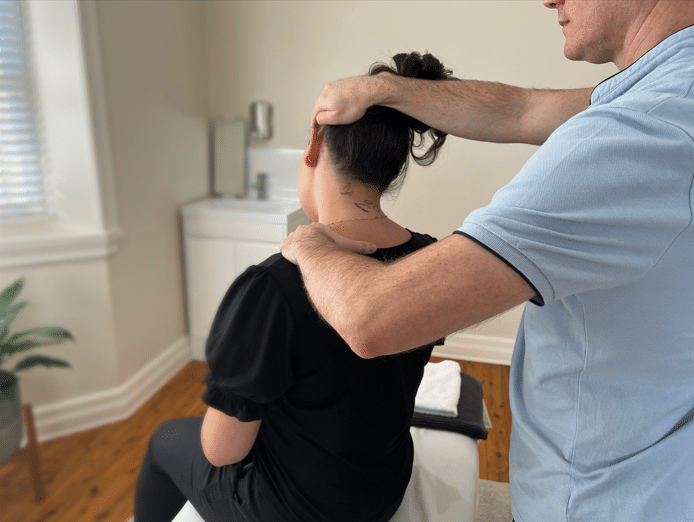
Soft tissue therapy addresses your myofascial restrictions directly. Techniques like hands-on soft tissue mobilisation help break down fascial adhesions. They improve sliding between fascial layers. Studies confirm that fascial manipulation reduces stiffness and improves tissue mobility in people with musculoskeletal pain.
The combination of adjustments and soft tissue work creates synergistic effects. Adjustments optimize joint mechanics while soft tissue therapy releases surrounding restrictions. This dual approach addresses both the neurological and mechanical components of your stiffness.
Exercise forms the third critical component of multimodal care. However, not all exercise programs are equally effective. Your chiropractor can prescribe the correct exercise dosage to reduce your ligament tension and joint stiffness.
Why Exercise Dosage Matters for Reducing Your Ligament Tension
Exercise prescription isn’t just about picking random movements. The specific dosage—including type, frequency, intensity, and duration—significantly impacts your outcomes. Research shows that optimal exercise dosage improves physical function and reduces pain in musculoskeletal conditions.
Your chiropractor considers multiple factors when prescribing exercise. Your current pain levels, tissue healing phase, range of motion, and strength all influence the appropriate dosage. Underdosing exercise provides minimal benefit. Overdosing can aggravate your symptoms and delay recovery.
For joint stiffness, specific loading strategies help. These incorporate mechanotherapy principles—using mechanical stress to stimulate tissue repair and remodeling. As your tissues adapt to exercise loading, your sensory information changes. Your central nervous system also adapts to these changes.
Progressive resistance training helps restore normal muscle function around your stiff joints. This reduces the excessive protective guarding contributing to your stiffness. Mobility exercises address fascial restrictions and improve tissue gliding. Proprioceptive exercises retrain your mechanoreceptor-muscle feedback system.
A 2025 Delphi study of expert physiotherapists emphasized the importance of individualized exercise dosing. One-size-fits-all programs don’t work effectively. Your chiropractor tailors exercise parameters to your specific presentation and response patterns. This personalized approach optimizes your outcome.
Combined with adjustments and soft tissue therapy, properly dosed exercise creates comprehensive improvement. You address mechanical restrictions, normalize nervous system responses, and restore optimal tissue function. This multimodal approach gives you the best chance of resolving your joint stiffness.