- 02 9712 1736
- [email protected]
- 212 Great North Road, Five Dock, NSW 2046
- Open 7 days a week

If your hips feel stiff, achy, or locked up, you are not alone. Hip tightness is one of the most common complaints I see in my clinic. It can show up as a dull pain in your front hip, an achy feeling in your lower back, or stiffness that makes it hard to stand up after sitting. In this blog, I want to walk you through what causes hip tightness. I will explain how it connects to your lower back, pelvis, and even your calf muscles. Most importantly, I will share how we can work together to get you moving and feeling better.
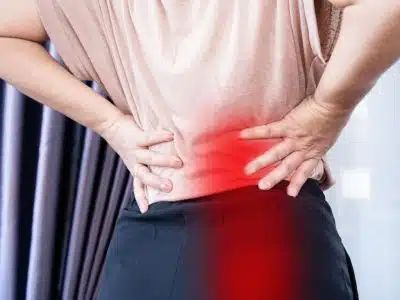
Let me start by describing what you might be experiencing. Your hip tightness might feel like a pulling at the front of your thigh. You might notice a dull pain deep in your hip when you stand up from a chair. Some people describe an achy pain that spreads into the lower back.
You might feel stiff first thing in the morning. Or your hips might “lock up” after a long car ride. These are all signs that your hip flexor muscles have become tight.
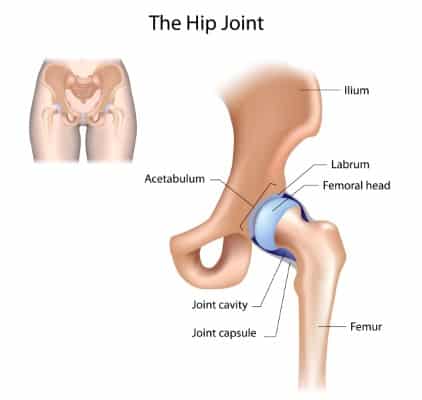
Your hip flexors are a group of muscles at the front of your hip. The most important one is called the iliopsoas. Think of the iliopsoas like a strong rope. It connects your lower back bones to the top of your thigh bone. Its job is to lift your knee towards your chest. It also helps to stabilise your spine and pelvis (Juan et al., 2024).
When this muscle becomes short and stiff, it pulls on everything it is attached to. That includes your lower back. Research confirms that tight hip flexors are major contributors to lumbar spine stability issues (Konrad et al., 2021). When they get too tight, they can change the way your pelvis sits. This can lead to pain in places you might not expect.
Here is a simple way to think about it. Imagine holding your arm bent at the elbow for eight hours straight. When you finally straighten it, it would feel stiff and sore. That is exactly what happens to your hip flexors when you sit all day.
When you sit, your hip flexors are held in a shortened position. Over time, they adapt to this shortened length. Research shows that sedentary behaviour is a major contributor to restricted hip extension flexibility (Konrad et al., 2021). A study by Hirase and colleagues found that around two-thirds of the population tested had limited hip extension. That means most of us are walking around with tight hips.
Your body is designed for movement, not for sitting at a desk. When you do not move enough, your hip muscles lose their ability to lengthen properly. This can lead to that familiar dull pain and stiffness you feel.
One of the most important things I want you to understand is this. Your hips do not work alone. They are part of a team. Your lower back, pelvis, and hips all move together. When one part is not working well, the others have to pick up the slack.
Research by Kim and Shin (2020) proposed that tight hip flexors contribute to altered biomechanics. When your hip flexors are tight, your pelvis tilts forward. This increases the curve in your lower back. Your lower back muscles then have to work much harder. Over time, this can cause lower back pain.
A 2023 study by Khan and Malik found an association between hip flexor tightness and lumbar instability in adults. This means that your tight hips could be making your lower back less stable. Shahid and colleagues (2023) reported that 63.5% of people with low back pain showed positive signs of hip flexor tightness.
A systematic review by Sánchez-Romero et al. (2023) also found that the hip joint range of movement is often altered in patients with low back pain. When your hips cannot extend properly, your spine compensates. This creates extra pressure on your lumbar discs and joints.
Think of your body like a chain. Each link depends on the others. When your hip link is stiff, the lower back link takes the strain.
Most people are surprised when I tell them this. Your calf muscles are connected to your hip tightness. Let me explain how.
Your body works as a kinetic chain. This means that movement at one joint affects all the other joints in the chain (Kachanathu et al., 2024). Each body part, from your foot up to your pelvis, acts like a link.
Your calf muscles, specifically the gastrocnemius, play a bigger role than you might think. Research published in StatPearls confirms that the gastrocnemius affects the entire lower limb. It influences the movement of both the hip and the lumbar area (Bordoni & Varacallo, 2023). This is because of something called the fascial continuum. Your muscles are wrapped in a tissue called fascia. This fascia connects your calf muscles all the way up through your thigh and into your pelvis and lower back.
When your calf muscles are tight, they change the way your ankle moves. Your knee and hip then compensate to make up for the lost ankle motion. This compensation travels up the chain to your pelvis and lower back.
Clinical research also shows that gastrocnemius tightness can produce hip flexion and lumbar hyperlordosis (Morales-Orcajo et al., 2021). This means that tight calves can actually make your hip flexors tighter by changing your posture.
This is why I always assess the whole chain when you come in with hip pain. Your tightness might start at the hip. But it could also be driven by what is happening at your ankle and calf.
Your hip tightness is not just uncomfortable. It can set you up for injuries. Research shows that restricted hip flexor length changes how your muscles fire (Mills et al., 2015). When your hip flexors are tight, your gluteal muscles become inhibited. Your glutes are the big muscles in your backside. They are your powerhouse for walking, running, and climbing stairs.
When your glutes are not firing well, your hamstrings take over. This overload on your hamstrings can lead to strains and injuries. The research suggests that hip flexor tightness should be considered an important factor in hamstring and ACL injury prevention (Mills et al., 2015).
Tight hips also change the way you move. Your stride length shortens. Your lower back takes more load. Your knees twist slightly to compensate. Over time, these small changes add up. They can lead to injuries in your knees, ankles, and lower back.
This is why addressing your hip tightness early is so important. It is not just about comfort. It is about protecting your body from future injuries.
Here is something that might surprise you. Stretching your hip flexors is helpful, but it is not the whole answer. Research shows that stretching for up to 120 seconds can improve your hip flexibility without reducing performance (Konrad et al., 2021). That is great news.
But here is the catch. If your hip flexors are tight because they are weak, stretching alone will not solve the problem. A recent systematic review by Juan et al. (2024) highlighted that the iliopsoas plays an essential role in hip and pelvic stability. If this muscle is weak, it can become overworked and tight as it tries to do a job it is not strong enough to do.
Think of it like a rubber band. If you stretch a weak rubber band, it will just snap back. You need to make the rubber band stronger so it can handle the load placed on it.
A 2025 study by Bernet and colleagues reinforced this idea. They found that BMI, not just flexibility, was a significant factor in hip flexor range of motion. This tells us that overall conditioning matters. Strength, body composition, and movement quality all play a role.
This is where the right exercise prescription becomes essential. You need the correct dosage of strengthening exercises alongside your stretching. Too little, and nothing changes. Too much, and you flare things up.
In my clinic, I use what is called a multimodal approach. This means I combine several evidence-based treatments together. This gives you the best chance of getting better, faster.
Here is how it works for your hip tightness.
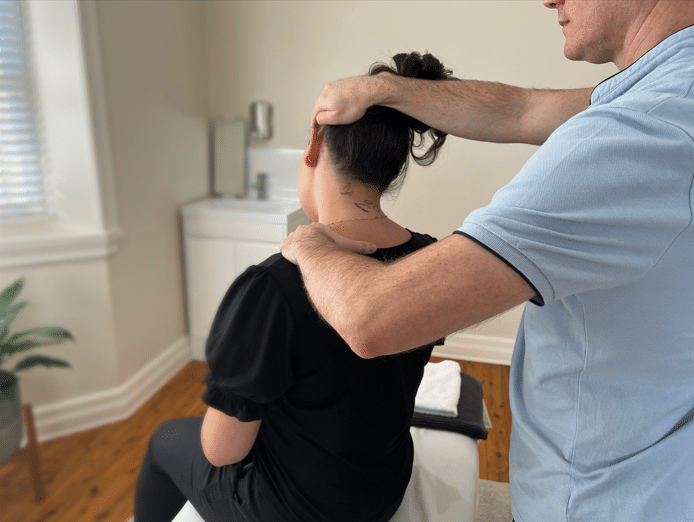
Soft Tissue Therapy: First, I use hands-on soft tissue therapy to release the tight muscles around your hip, pelvis, and lower back. Research shows that soft tissue therapy, including myofascial release, is effective for treating musculoskeletal conditions (Southerst et al., 2015). It helps to reduce muscle tension and improve blood flow to stiff areas.
Chiropractic Adjustments: I then use gentle spinal adjustments to restore proper movement to your lower back and pelvis. A 2021 narrative review by Gevers-Montoro and colleagues found the strongest evidence in support of multimodal approaches. The combination of spinal manipulative therapy and exercise was identified as one of the best approaches for managing pain. An individual participant data meta-analysis by de Zoete et al. (2021) also concluded that spinal manipulative therapy provides outcomes comparable to other recommended interventions for pain relief and functional improvement.
Prescribed Exercise: This is where the magic really happens. I prescribe specific exercises tailored to your body. Research by Radovanović et al. (2022) demonstrated that high-loading exercise for 12 weeks led to increased tendon stiffness and size. This is critically important for tendon health. Stronger tendons are more resistant to injury.
A systematic review by Lazarczuk et al. (2022) found that mechanical loading produces moderate increases in tendon stiffness. The review also showed that resistance training was the primary type of intervention that drove these positive changes.
But here is the key. Exercise dosage matters enormously. A 2024 study by Scattone Silva and colleagues established specific patellar tendon loading tiers. They recommended clinicians use these tiers to progressively increase tendon loading during rehabilitation. Getting the dosage wrong can delay your recovery or cause a flare-up.
As your chiropractor, I can prescribe the correct exercise dosage to progressively strengthen your tendons. This means we start at a level that is right for you. Then we gradually increase the load as your body adapts. Research confirms that progressive tendon-loading exercise is more effective than eccentric exercise alone (Breda et al., 2022).
A case series published in 2025 demonstrated how a multimodal chiropractic treatment approach, using soft tissue therapy, adjustments, and progressive exercise, successfully managed tendon injuries in athletes (Broadbent et al., 2025). This kind of combined approach gives your body the best opportunity to heal and get stronger.
I always tell my patients this. Movement is medicine, and strength is your insurance policy.
Your hip tightness did not develop overnight. It built up gradually over weeks, months, or even years. Fixing it requires a plan that addresses the root cause. That means building strength in your hip flexors, glutes, and core.
Research shows that strengthening the hip muscles can reduce pain and improve function in people with low back pain (Sánchez-Romero et al., 2023). When your hips are strong, they can handle more load. Your lower back does not have to compensate. Your movement improves.
The key is consistency. Short, regular exercise sessions are more effective than occasional big efforts. Together, we create a plan that fits into your life.

Your hip tightness is a common problem with real solutions. It often comes from too much sitting and not enough movement. But it is rarely just about the hip. Your lower back, pelvis, and even your calf muscles all play a role. Tight hips can change your posture, weaken your glutes, and set you up for injuries. Stretching helps, but strength is the long-term answer. A multimodal chiropractic approach, combining soft tissue therapy, adjustments, and the right exercise prescription, gives you the best chance of lasting relief. If you are dealing with hip tightness, dull pain, or achy hips, I would love to help you get moving again.

Scott has more than 20 years of clinical experience as a movement expert and musculoskeletal health professional. His thorough understanding of how pain affects your spine, joints, muscles, and total well-being is the result of significant academic study and many many years of clinical experience. Scott’s real interest in movement mechanics enables him to develop individualised care plans that summarise complex problems into clear, simple treatments, leading to quicker healing times. His friendly, attentive approach ensures that you not only comprehend but also feel supported throughout your treatment journey, allowing you to return to the things you like with restored confidence and vitality.