Why Your Pain and Tightness Change Through Pregnancy
Your body doesn’t just grow a baby. It completely rewires itself. Hormones like relaxin flood your system. They loosen your ligaments and joints. This is necessary for labour. But it also means your pelvis and spine become less stable.
Research tells us that up to 90% of pregnant women experience back pain (Weis et al., 2021). That dull pain in your lower back? It’s not in your head. Your centre of gravity shifts forward. Your lumbar curve increases. Your muscles work overtime to keep you upright. That achy pain you feel by the end of the day is your body trying to adapt.
Here’s what surprises many of my patients. This pain often starts much earlier than expected. Your injury to comfort starts with your posture changing in the first trimester. And it tends to get worse as your baby grows.
First Trimester: When the Stress Response Begins
Most people think the first trimester is too early for body pain. But your hormones are already shifting. Progesterone and relaxin begin circulating early. Your joints start to loosen. Your muscles can feel tight as they try to compensate.
This is also when your stress response ramps up. A 2024 randomised controlled trial found that pregnancy activates the HPA axis (Wilczyńska et al., 2024). That’s your body’s main stress system. It triggers cortisol release. Cortisol in small doses is normal. But sustained high levels can affect your sleep and mood.
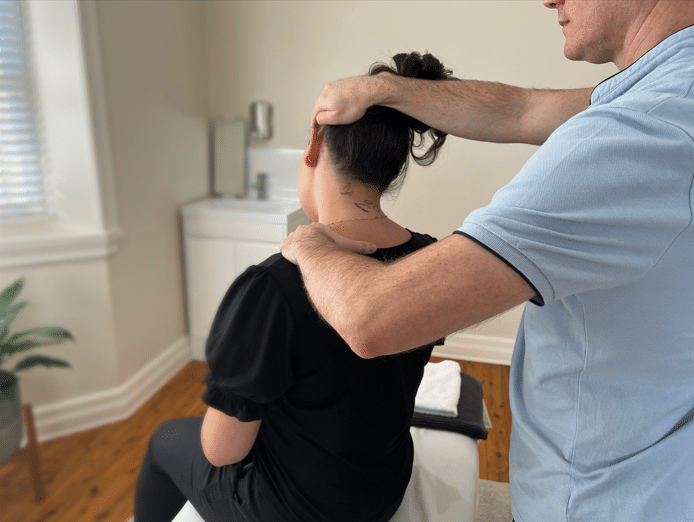
I often start working with patients in this trimester. Gentle chiropractic adjustments help your nervous system settle. We’re not cracking your back aggressively. We’re using safe, modified techniques to support your spine. Soft tissue therapy can ease early muscle tightness around your mid-back and hips.
Sleep disruption also begins here. Research shows insomnia affects about 25% of women in the first trimester (Kember et al., 2023). That number climbs as pregnancy progresses. When I can help reduce your pain early, your sleep often improves too.
Second Trimester: Managing Dull Pain, Achy Pain, and Muscle Tightness
The second trimester is when most patients walk through my door. Your belly is growing. Your posture is shifting. That dull pain in your lower back becomes a constant companion.
Your muscles become tight because they’re working harder. Your glutes, hip flexors, and lower back muscles all bear extra load. Pelvic girdle pain affects roughly 20% of pregnant women (Conner et al., 2021). It can limit your ability to walk, roll in bed, or climb stairs.
This is where I love using a multimodal approach. I don’t just adjust your spine. I combine it with hands-on soft tissue therapy and targeted exercise. A meta-analysis of 10 studies on over 1,198 pregnant women found that manual therapies, including massage and spinal manipulation, significantly reduced both pain and disability compared to usual care (Hall et al., 2016).
A Multimodal Chiropractic Approach: Soft Tissue Therapy, Adjustments, and Exercise for Stress Reduction
Here’s something many people don’t realise. A chiropractor can do much more than adjustments. In our clinic, I use a combination of three evidence-based tools.
Soft tissue therapy targets your tight muscles directly. A systematic review of 12 randomised controlled trials found that massage during pregnancy reduced back pain, leg pain, anxiety, and depression (Müller et al., 2021). It also increased serotonin and dopamine levels. These are your body’s natural feel-good chemicals.
Chiropractic adjustments help restore joint movement. When your joints move better, your nervous system calms down. A systematic review found that spinal manipulation was associated with improved outcomes in pregnancy-related low back pain (Weis et al., 2020). The evidence is described as favourable, though researchers call for more high-quality trials.
Prescribed exercise is the third pillar. This is where getting the right dosage matters. A 2023 narrative review on exercise dose during pregnancy highlighted that frequency, intensity, time, and type must be assessed individually (Claiborne et al., 2023). Too little exercise doesn’t help. Too much can overwhelm an already stressed body. As your chiropractor, I can help prescribe the correct exercise dosage for your stage of pregnancy.
The combination of these three approaches helps lower chronic inflammation. It supports nervous system regulation. And a 2024 systematic review confirmed that non-pharmacological interventions, including manual therapy and exercise, significantly reduced stress, anxiety, and depression in pregnant women (Abera et al., 2024).
This matters because your stress response directly affects your baby. When cortisol stays elevated, it crosses the placenta. Keeping your stress levels managed isn’t just about your comfort. It’s about your baby’s development too.
Third Trimester: Preparing for Labour Through Movement, Pain Management, and Strength
The third trimester brings the biggest physical demands. Your baby is heavy. Your pelvis is under maximum load. Sleep becomes genuinely difficult; research shows that the prevalence of insomnia jumps to over 40% in the third trimester (Kember et al., 2023). Musculoskeletal discomfort is a major contributor to that lost sleep.
This is when chiropractic care becomes about preparing for labour. Your pelvis needs to move well for delivery. When your sacroiliac joints and pubic symphysis function properly, labour can progress more smoothly. I use gentle adjustments to keep your pelvis balanced. We focus on movement and strength to support your body through birth.
A systematic review by Conner et al. (2021) noted that chiropractic care is a commonly used, evidence-supported approach to musculoskeletal pain during pregnancy. It offers intervention without medications, something especially important when pharmacological options are limited.
Exercise in this trimester remains vital. The American College of Obstetricians and Gynecologists recommends 150 minutes of moderate-intensity exercise per week throughout pregnancy (ACOG, 2020). This can include walking, swimming, or specific strengthening exercises. A systematic review of 57 high-level studies found that exercise during pregnancy helps prevent gestational diabetes, excessive weight gain, lumbopelvic pain, anxiety, and prenatal depression (Tavares de Oliveira et al., 2022).
But here’s the key, your exercise needs to be adapted to you. Your injuries, your pain levels, and your fitness history all matter. A chiropractor trained in exercise prescription can tailor a programme that builds your strength for labour without pushing you into discomfort.
Improved Sleep Through Pain Management and Nervous System Regulation
Let’s talk about sleep. It’s one of the most underrated aspects of pregnancy health. Poor sleep during pregnancy is linked to preeclampsia, gestational diabetes, and postpartum depression (Lu et al., 2021).
When your pain is managed, you sleep better. It’s that simple. When I reduce the muscle tightness in your lower back and hips, you can actually get comfortable. When your nervous system isn’t in overdrive, you can stay asleep.
A systematic review of randomised controlled trials found that massage during pregnancy improved sleep disturbance, alongside reducing anxiety and headache (Müller et al., 2021). Chiropractic care works in a similar way. By calming your nervous system and reducing your pain, we create the conditions for improved sleep.
Is Chiropractic Care Safe During Pregnancy?
This is the question I get asked most. The short answer is yes, when provided by a qualified practitioner. A 2021 systematic review specifically examined adverse events from spinal manipulation during pregnancy and postpartum (Weis et al., 2021). It found only minor and transient side effects in the low back. No long-lasting adverse effects were reported.
A best-practice consensus process involving 78 panellists from seven countries developed 71 recommendations for chiropractic care during pregnancy (Weis et al., 2022). Consensus was reached on the importance of informed consent, multidisciplinary care, and adapting techniques for each trimester.
I use pregnancy-specific techniques. Modified tables. Side-lying positions. Gentle mobilisations rather than forceful adjustments. Your safety, and your baby’s safety, always come first.